
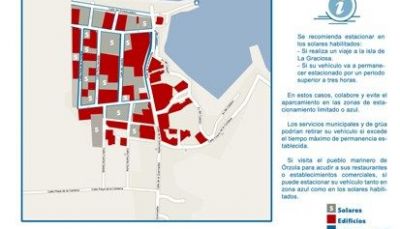
The Department of Tourism of the Cabildo of Lanzarote, together with the Department of Transport and the Haría City Council, will begin this Friday a small information campaign of recommendation, aimed at residents and tourists who visit the coastal town of Órzola on these dates, the town where the only port of Lanzarote is located with access to the island of La Graciosa.
In this sense, the Cabildo of Lanzarote and the Haría City Council request collaboration from drivers who arrive in this small northern town to park their vehicles in the lots enabled for this purpose, if they travel to La Graciosa or if their stay in Órzola exceeds the three hours of parking allowed in the blue zone. If they do not comply with this request and exceed this period of time, the municipal crane and limited parking control services of the City Council could remove the vehicles.
Similarly, the Cabildo of Lanzarote and the Haría City Council recommend and inform tourists and residents of Lanzarote and La Graciosa that if they go to restaurants and commercial establishments in Órzola they can park in the blue zone or in the adjoining lots. And, in these cases, it is assumed that they will not remain in the town for more than three hours.
Avoid a collapse
With this measure, explains Luis Arráez, Minister of Tourism of the Cabildo, "it is intended to prevent the streets from collapsing and limited parking areas by those drivers and people who are going to visit the island of La Graciosa and leave their vehicles in the blue zone, with the corresponding fine and even removal of the vehicle if they exceed the three hours allowed".
"If we respect the signage and the proper use of existing parking spaces, we will contribute to revitalizing the area and generating greater traffic of people to the restaurants and commercial establishments of this coastal nucleus," says the councilor. "In times of crisis, now more than ever, the restaurant and commerce sector of the island needs everyone to collaborate, in order to maintain a more respectful and supportive coexistence with the local economy," emphasizes Luis Arráez.


