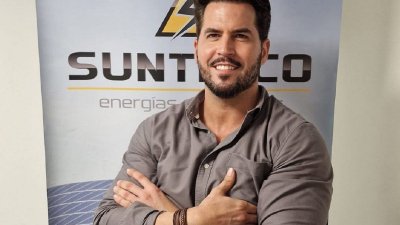
Javier Quintana started as an electrical installer in his father's company, Lámparas Canarias, until in 2009 he decided to found Suntelco where, in addition to being a technician, he acted as secretary, administrative and commercial.
Since then, he has gone from billing 18,000 euros a year to more than 4 million, only in photovoltaics. In an interview with Ekonomus, Quintana explains the transformation that the sector has undergone and anticipates what, in his view, is yet to come.
- How were the beginnings of Suntelco?
In the 90s my father set up the company Lámparas Canarias and in 2001 I opened an installation division within the company. In 2009 I set up Suntelco, we started very modestly, but with luck, good people and hard work we managed to have a name on the island and today, in renewables, we are quite well known.
At the beginning I was the installer, since I am a technician by profession and I started from the bottom. And as in all beginnings at that time, in addition to being a technician, I was also a secretary, administrative, commercial... I was everything, and 24 hours a day.
"Batteries for night consumption are still very expensive"
- What services does the company offer?
The initial idea was an electrical installation business with some solar panels in houses that were in the mountains and maybe the annual billing was 18,000 euros in photovoltaics. Now the photovoltaic part is more than 4 million. But we are an installer with 360º solutions. In addition to electrical installations, renewables and electric vehicle charging points, we also do air conditioning, geothermal, fire protection, plumbing, etc.
"Hotels have a big problem, their terraces are usually staggered, so you can place between 100 and 200 KW in panels, but they consume up to 800KW"
- How has the renewable energy business evolved since the creation of Suntelco?
In 2007 the government enacted decree 661, (legislation that regulates the activity of electricity production under a special regime), but renewables exploded in Lanzarote from 2009, just when I set up the company. We went from doing jobs of 20,000 to 30,000 euros in restaurants, to doing works of up to one million euros.
- I understand that you are leaders among the companies in Lanzarote that are dedicated to renewables, how many employees are there?
We have gone from billing 300,000 euros in 2009 to six million at present, two of the works we carried out last year exceeded three million. Over time we have managed to become one of the references in the sector. Now we are more than 80 in the team, but in peaks of a lot of work we have reached almost 100 workers.
"The most interesting thing about energy communities is their negotiating capacity"
- So, do you consider that photovoltaic installations on the ground are inevitable to reach the maximum percentage of renewables in the energy mix?
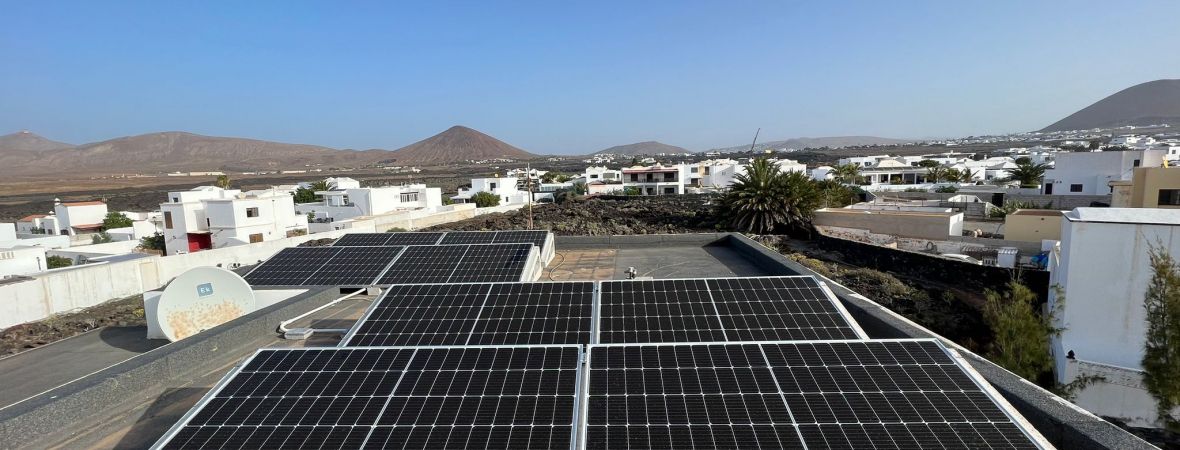
The island will never be self-sufficient with photovoltaic on the roof, and look how ideal the single-family homes of Lanzarote are. At a rural level it could be a very interesting solution, but they also do not reduce the bill beyond 30-40% because the batteries are still very expensive, and isolating yourself from the grid is very expensive, because you lose the security of supply.
We are going to have to go to the ground yes or yes. It is inevitable that Lanzarote has panels on the ground to be able to supply all the demand that we are going to have. And above all, we must take into account the arrival of the electric car, which will need charging points everywhere. It is expected that the total in renewable energies will rise on the island to 300MW implemented, so without the use of the soil, this will be unfeasible.
- And could shared roof programs or energy communities help?
From the Chamber of Commerce of Lanzarote we are supporting and pushing in this regard. For me, the most interesting thing about energy communities is not so much the energy that is produced, but the negotiating capacity, since so many people are attached, they negotiate jointly and save more through that route than through the panels themselves.
"In 20 or 30 years batteries will become widespread to transmit electricity from the house to the car and from the car to the house"
- What would you recommend to a Lanzarote resident who wants to reduce their electricity bill?
The first thing would be to look for a company that advises them properly, since each case is different... In most cases I would recommend a first phase that people install in their house a photovoltaic installation of four or five kilowatts with an inverter. In five years they could install a battery for night consumption because they are still very expensive.
Then, as the electric car is introduced there will be an exponential growth in consumption, in about 20 or 30 years, then you could expand the number of panels with batteries that allow electricity to be transmitted from the house to the car and from the car to the house.
Add La Voz de Lanzarote as a preferred Google source.
Stay informed with the latest current news.