
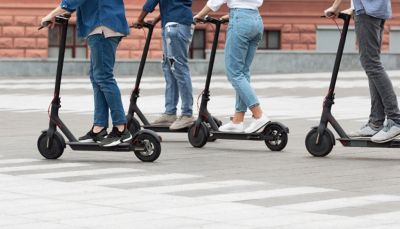
The General Traffic Directorate (DGT) has decided to take action on electric scooters, officially known as Personal Mobility Vehicles (PMV), and design a specific regulation that will come into force on January 22.
Scooters for sale from January 22 must have a certification according to the new requirements of the DGT.
How many types of PMV exist?
The DGT distinguishes between those used for personal transport and those intended for the transport of goods or other services.
PMVs for personal transport are, basically, the most common scooters that we can find on the street. The basic difference with respect to PMVs for the transport of goods is that the latter must have at least 3 wheels, with 2 of them on the axis closest to the load (which would be the box where the goods are transported).
The maximum height of PMVs for personal transport is 1400 mm and their maximum width is 750 mm.
What does the necessary approval for the new scooters consist of?
The PMVs that are marketed from January 22, 2024 will have to have a series certificate, which manufacturers can request following these instructions from the DGT.
From January 22, 2027, only PMVs that have said certificate will be allowed to circulate, which will be reflected in an information plate that the scooter must carry.
What characteristics must they have to be approved?
They must be manufactured to circulate at a maximum speed of 25 km/h and have a system so that neither the speed nor the power can be modified. They must also include a visible information indicator that shows the speed and battery level.
Likewise, they must have two independent brakes with a minimum deceleration of 3.5 m/s². Vehicles with more than 2 wheels must also have a handbrake.
PMVs must also be equipped with white front reflectors, white or yellow side reflectors, and red rear reflectors. In addition, the brake light must be different or combined with the rear light.
They will need to have a horn and a stabilization system, either a side stand or a central stand to prevent them from falling when parked.
The minimum diameter established for the wheels is 203.2 mm, with a rough surface for traction. The use of smooth tires is strictly prohibited.
Finally, PMVs manufactured from January 22 must have a double safety system to guarantee that they remain folded safely and prevent unintentional opening.
Is a license, insurance or passing an ITV necessary?
Although it could change in the coming years, it is still not necessary to have any license to circulate.
However, scooters must always circulate on bike lanes or on the road, never on sidewalks, highways or dual carriageways.
The regulations do not require having insurance, since the scooter is not considered a motor vehicle. However, it is recommended to have civil liability insurance in case of an accident.
Regarding the ITV, the Spanish Association of Collaborating Entities of the Administration in the Technical Inspection of Vehicles (AECA-ITV) has presented an inspection proposal for scooters, but no agreement has yet been reached.


