
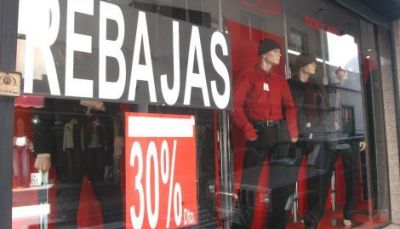
The Canary Islands together with Cantabria are the only two autonomous communities where the sales start later, since, for example, in Madrid and Castilla La Mancha they started on the 1st and in the rest of the places today, Sunday, the 7th. After several years in which this period began in the province of Las Palmas before that of Santa Cruz de Tenerife, in 2007 they coincide on the date: January 8.
It should be remembered that last year they started in Gran Canaria on the 7th, in Fuerteventura and Lanzarote on the 9th and on the 11th on the islands of the province of Santa Cruz de Tenerife.
From today, Sunday, many shop windows on the Islands appear with discounts and offers of up to 50 percent so that consumers can take note of what they want to acquire. In fact, on this Monday, returns from the Three Wise Men will be mixed in the shops with 'bargains', so it is most likely that long queues will form from the early hours when paying.
In 2006, Canarians spent an average of between 100 and 115 euros in the winter sales, so this year that figure is expected to increase, since in 2005 they invested an average of 90 and 105 euros in "bargains". The bulk of the purchases of the inhabitants of the Archipelago focuses on clothing and footwear.
According to the Confederation of Consumers and Users (CECU), almost 70 percent of consumers say they prefer to wait for the sales to acquire certain products such as clothing, for which more than 35 percent opt, footwear more than 27 and accessories 16 percent.
The consumer organization also points out that more than half of consumers check the price of what they want to buy before the sales begin to verify the differences.
IT'S SALES, NOT CLEARANCE
Therefore, with the arrival of this period, the CECU recalls that all items sold in sales must have been on sale previously in the establishment and explains that sales must be differentiated from other commercial practices, such as clearance: sale of deteriorated or obsolete products that do not imply risk or damage to the consumer, liquidations: sales of an exceptional nature, produced as a consequence of a judicial decision, cessation of activity, change of branch, premises, work, etc., to give way to all existing products in the premises; or offers or promotions. Likewise, CECU insists that the regulations prohibit selling defective or flawed items as sales.
Regarding payments, it points out that if an establishment allows payment by card the rest of the year, it cannot refuse to accept this means of payment during the sales period and recalls that the old price or the percentage of discount applied to the item must appear next to the discounted price.
Regarding the policy of changes or returns, it ensures that stores may not admit them as long as the product is not defective and that they advertise it. However, it specifies that the recommendation would be that the policy of the premises be the same in the sales period as during the rest of the year. Thus, CECU advises that the consumer be informed of these possibilities "and, why not, that this policy also plays a role when deciding in which store a purchase is made".


