
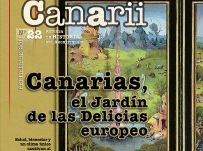
To mark the celebration of International Tourism Day on September 27, the Canaria Archipelago 2021 Foundation, publisher of Canarii Magazine, will present its number 22 with a monograph on the history of tourism in the Canary Islands, entitled "Canarias, the Garden of European Delights", which has been coordinated by Michel Jorge Millares, a journalist specializing in this sector.
The presentation events of the magazine will be accompanied by talks and debates on new tourism models and the prospects for tourism in the Canary Islands, with the participation of leading experts from the sector.
In the case of Lanzarote, the presentation will take place next Thursday, September 29, at 8:00 p.m., at the Castle of San José.
In number 22 of Canarii magazine, ten historians and experts on tourism in the Canary Islands participate, with articles covering a broad perspective on the origin and evolution of the Canary Islands tourism sector to the present day. The publication has received the support of Promotur, which will distribute it during the presentation ceremony of the Tourism Excellence Awards, which is being held this year in Santa Cruz de La Palma on September 27.
A suggestive image on the cover alerts readers to the content of this publication, with a unique version of the painting by El Bosco, "The Garden of Earthly Delights", in which the image of golf players and tourists lying on their hammocks has been incorporated next to the drawing of the Canary Island dragon tree, included by the famous painter in this work. This image coincides with the title of this new publication: "Canarias, the Garden of European Delights", as it includes in the first article a work on the mythological and legendary origin of the Canary Islands brand in the dawn of civilization, as they were known as Insula Fortunae.
Content
The opening of the first hotels in the Islands, linked to the search by British and Germans for a place to recover the health that the development of industrial society had taken from them, as well as a selection of texts by travelers who spread the values and characteristics to the ruling classes of their countries of origin, are included in the publication.
Another highlight is the image that the Canary Islands had for tourism at the beginning of the 20th century, complemented by advanced and pioneering ideas, such as the case of Néstor Martín Fernández de la Torre, who promoted the Canary Island product through infrastructures and strategies that took into account the typical and the rescue of local products to surprise tourists.
Another aspect included in this publication is the incorporation of the Canary Islands into the phenomenon of mass tourism, thanks to the irruption of air transport and, thanks to this, the development of large areas for the construction of hotel and extra-hotel establishments, where a new type of architecture was produced, such as the constructions promoted by the studio created by Manuel de la Peña, precursor of the urban development of Maspalomas Costa Canaria.
Another work included in the magazine collects the testimonies of numerous workers and citizens in the face of the new situation, with the presence of thousands of foreigners traveling through the territory of the Islands with another language, another culture, another religion.
All this change and the pressing need of the Spanish State to obtain foreign currency to get out of the underdevelopment that the country was experiencing, led to the holding of provincial assemblies in which the Franco regime tried to find out the economic, administrative, fiscal and educational situation of those territories most affected by tourism. Personalities from the world of culture and natural, historical and artistic heritage also participated in these meetings. An opening in a dictatorial regime that left several documents that reflect the concerns of a society that saw in tourism the great hope for development. Among the participants was another icon of the history of tourism in the Canary Islands, César Manrique, whose work in Lanzarote is the subject of an article on his legacy and the need for his work and concerns to be taken into account when analyzing the actions to be carried out on the island.
Tourism, like any other economic activity, is subject to the
variations that occur in the markets: energy crisis, implementation of taxes, improvement in efficiency or infrastructure and this is also discussed. And, finally, several pages collect data, characters and events that have occurred throughout history and that have shaped what is today the tourist destination of the Canary Islands, one of the most important in Europe.


