
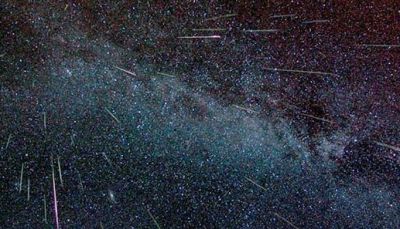
Lanzarote is approaching one of the most important dates on the astronomical calendar of the Canary Islands and the northern hemisphere of the Earth. From the Island of Volcanoes and during this weekend you can enjoy one of the most impressive events of the summer: the Perseids or meteor shower. This phenomenon is called Perseids because the meteors come from the constellation of Perseus.
For those who are thinking of escaping light pollution and being captivated by the Tears of San Lorenzo, prepare a blanket and reserve the next weekend in the agenda. Thus, as reported by the official website of the Canary Islands, it will be during the early morning of Saturday, August 12 to Sunday, August 13 when the Perseids will reach "their maximum activity". In total, up to 100 meteors per hour are expected.
This activity, outdoors and free, has few requirements to meet in order to enjoy an unforgettable night looking up. Experts in the field advise to look for spaces away from light pollution, the more darkness in the environment, the more likely you are to see the sky better. So, first advice: flee from areas where pollution from the light of buildings, houses or roads prevents good visibility.
In addition, the Government of the Canary Islands recommends finding a place with a clear horizon, where the absence of clouds predominates. Summer nights are ideal for good stargazing.
Where to see the Perseids?
Due to the position of the moon expected for this weekend "any area where there is no energy waste" will be perfect to see the stars, "lie on your back with a mat and count stars", explains the astronomer Gustavo Muller.
For example, areas such as El Mojón or Las Roferas de Guatiza are ideal for this feat. Also, the Government of the Canary Islands ensures that the best views to enjoy this stellar party will be northeast of Lanzarote. Once located in a space without light pollution and with few clouds, in the northeast of the island, you will have to get to work and play to explore the sky of the island. Once in a good place, it is best to look for the constellation of Cassiopeia, which is easier to locate than Perseus.


