

The El Salinero Theater was full on Saturday night at the premiere of 'The Time of Salt', Carmen Tortosa's documentary about Víctor Fernández Gopar, a shepherd, salt worker, improviser and poet born in Las Breñas in the 19th century who gives his name to this theater.
In 2015, the Granada poet Carmen Tortosa met the "living and vibrant" lyrics of Fernández Gopar. It was during a poetry recital she organized in the Janubio salt mines. From then on, she began to investigate the popular Lanzarote poet to end up making this documentary, in whose realization the Culture area of the Cabildo of Lanzarote has collaborated, through a subsidy.
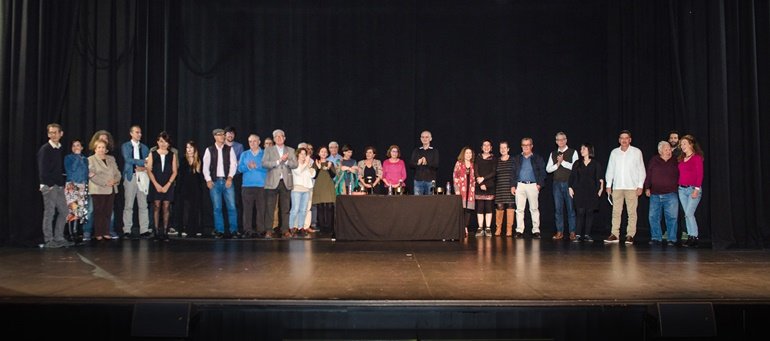
Grandchildren, great-grandchildren, people who did not know El Salinero, but who do know his couplets, are the protagonists of the documentary. Many were in the audience on Saturday. And it is that the verses of El Salinero have been preserved in oral memory, in parties, sayings and canteens. Later they were rescued by the family of folklorists of the Corujo, and compiled in a book by the researcher Agustín de la Hoz.
The screening of 'The Time of Salt' was included in the program of the Lanzarote International Film Festival (FICL), and among the attendees were the president of the Cabildo of Lanzarote, Pedro San Ginés, and the director of the FICL, Ismael Curbelo.
Will travel to the International Poetry Festival of Vitoria-Gasteiz
On Saturday, the new re-edition of the Coplas de Víctor Fernández Gopar was also presented, which has been directed by Ediciones Remotas, the publisher of the historian Mario Ferrer and the photographer Rubén Acosta. The book, which preserves the original notes of Agustín de la Hoz, once again has a cover signed by the Lanzarote artist Ildefonso Aguilar and incorporates new texts by philologists and folklorists.

The documentary will be presented in Yaiza on April 26 and in May will travel to the 6th International Poetry Festival of Vitoria-Gasteiz, which has organized a colloquium with the master of the Janubio salt mines, Modesto Perdomo, and his counterpart from the Añana salt mines (Álava).


