
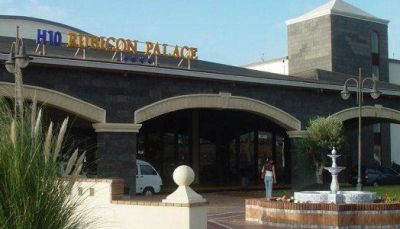
The Superior Court of Justice of the Canary Islands has declared executed the Judgment issued on June 15, 2007 (ten years ago) annulling the building permit that the former mayor of Yaiza, José Francisco Reyes, granted on February 19, 1999 for the construction of a hotel with 900 tourist beds in the town of Playa Blanca, in breach of island and municipal urban planning regulations.
Once the judgment declared the license that had authorized the hotel illegal, the building was in the same situation as a work "without a license" (in the words of the Chamber itself, "without any legal coverage") in which, however, it has remained for years because the Cabildo of Lanzarote (which filed the appeal against the license in the courts) never asked the Court to execute the judgment.
It was the César Manrique Foundation, which also appeared in all the Cabildo's lawsuits, that, given the passivity of this corporation, decided to request that the judgment be executed, to which the Chamber agreed, launching the process of forced execution of its resolution, in which the first thing to determine was whether the work, despite failing to comply with the regulations in force when the annulled license was granted, could be legalized by applying the new General Plan of Yaiza approved in 2014.
In this phase of execution of the judgment, it was verified, through the reports issued by the municipal architect and the drafting team of the new General Plan, that the building constructed under the annulled license complies with the rules established in the new General Plan of 2014, hence the City Council, in an agreement adopted by the Local Government Board on September 14, 2016, has granted a "legalization" license to the aforementioned hotel once adapted to the new general plan, said agreement being validated by the Chamber in the resolution that declares the judgment executed.
The legalized hotel has raised its category to 5 stars and has had to pay the City Council a total of 541,000 euros for obtaining the legalization permit in respect of municipal fees, in addition to assuming the obligation to pay for and execute the works necessary for the completion of the urbanization of the area where it is located.
The Court considered the Cabildo's attitude in the execution of the judgments "incomprehensible"
The Superior Court of Justice has also reproached the Cabildo for its passivity in the execution of all the judgments that declared illegal the licenses that authorized all those hotels. In the judgment issued by the Chamber on October 30, 2012 (issued in appeal no. 420/2011), which confirmed the annulment of all the urban planning permits that allowed the construction of the Hotel Papagayo Arenas, the Court stated "the minimum effects in the material legal order of this annulment, since what must be said, ultimately, by the administrations called to act before a work that lacks a license is the compatibility of such work with the planning, which, taking into account the time elapsed since that first Judgment and the attitude of the Cabildo, is incomprehensible".


