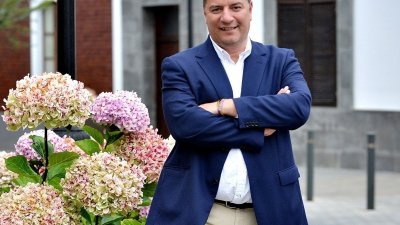
The Minister of Education, Vocational Training, Physical Activity and Sports of the Government of the Canary Islands, Poli Suárez, defended in the Education Commission of the Parliament the structural reinforcement of the resources allocated to students with Specific Needs for Educational Support (NEAE), in response to a parliamentary question about the increase in personnel in this area.
During his speech, Suárez stressed that “there are more resources and there is more funding” and detailed that the investment in diversity support has increased by more than thirty million euros since the beginning of the legislature.
“We have gone from 2,776 specialized teachers in 2023 to 3,386 in the 2025/2026 academic year, and from 941 educational assistants in the 2022/2023 academic year to 1,813 currently. That represents an increase close to sixty percent. It is an unprecedented effort in the history of the Canarian education system,” he affirmed.
The counselor added that “we have gone from serving 2,900 students to more than 5,000 currently, which shows that inclusion is not a slogan, it is a reality that is built with resources and commitment” and recalled that the Executive is already working on the future Law for Attention to Diversity in the classrooms of the Canary Islands to update the regulations and consolidate a more inclusive model adapted to the reality of the students.
This increase in resources has translated into a real expansion of the specialized care network in educational centers. Thus, the Ministry has reinforced the Enclave Classrooms, which reach 359 units in the 2025/2026 academic year, compared to the 290 with which the previous legislature ended. In addition, there are another twenty classrooms projected, which allows for a more tailored response to students with special educational needs in ordinary environments.
In parallel, the number of Special Education Centers (CEE) has increased, with three new openings and the forecast of a next one in Adeje. These infrastructures are complemented by seven new specific units for students with autism spectrum disorder (TEA), thus reinforcing specialized attention.
Within this educational continuity strategy, the pioneering project NEAE+21 allows students over twenty-one years of age with intellectual disabilities to remain connected to the educational system during their transition to adult life, while the new Adapted Vocational Training model expands the training offer to improve personal autonomy and the employability of students. Both measures are part of the same objective: that no student is left out of the system due to age or profile.
To this structural reinforcement are added measures of direct support to families, such as free school meals for students in Aulas Enclave and Special Education Centers, as well as the line of aid endowed with 800,000 euros aimed at students with TDAH with a disability greater than 25 percent, which contributes to alleviating the economic burden and guaranteeing equal opportunities.
Detection and inclusion
Work in attention to diversity is not limited to the compulsory stage, but begins from the earliest ages. The Canary Islands have eleven Early Attention Units distributed across all islands and two provincial teams of an experimental nature to reinforce detection and intervention from zero to six years of age, promoting a more agile and coordinated response.
In the area of inclusion in mainstream schools, the Project for Inclusion for students with ASD is being developed this school year in 52 public schools of Early Childhood and Primary Education, compared to 34 in the school year prior to this legislature, incorporating reinforcements of specialist teachers and speech and language therapists to improve educational response within the classroom.
Likewise, the Ministry has promoted specific programs for students with high abilities, with initiatives such as Accompanying High Abilities and the School of High Creativity in Family, in addition to the implementation of specialized teams on an experimental basis.
The set of these actions, combined with the Nursing Program in schools —present in 64 educational centers with 23 health professionals—, consolidates a model of attention to diversity and direct support to families present on all islands.
Add La Voz de Lanzarote as a preferred Google source.
Stay informed with the latest current news.