
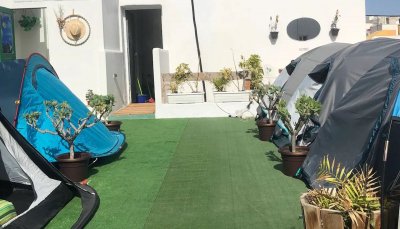
The Ministry of Tourism and Employment and Airbnb, through the Memorandum of Understanding (MoU) signed on April 9, added to the action of the central government for the single registry, has allowed to purify the tourist offer that did not comply with current regulations in the archipelago. More than ten thousand irregular listings have been deactivated.
“What a year ago occupied headlines in the press, such as rooftop tents, mini-campsites in commercial premises or camper vans, is no longer present on Airbnb and will soon not be on other platforms with which we continue to dialogue”, says the Minister of Tourism and Employment, Jéssica de León.
The Director of Public Policies for Spain and Portugal at Airbnb Marketing Services, Sara Rodríguez, highlights that “this is a new chapter for Airbnb in the Canary Islands, defined by a proactive commitment to collaboration, quality and a long-term vision of sustainable growth.”
During these months, the platform has notified all hosts in the Canary Islands of the obligation to register and has worked intensively to provide guidance to their community, through regular notifications, reminders and additional resources.
This effort between the Government of the Canary Islands and Airbnb has been carried out before the entry into force of the new European Union Regulation on short-term rentals or sanctioning procedures.
The next phase of the process focuses on homes that lack both regional and state registration. “Although the one-stop shop decree represents a useful tool, complete information is not yet available on the owners or the specific causes of irregularity indicated by the Association of Property Registrars.
The Airbnb platform has shown its willingness to collaborate, but the effectiveness of the decree will depend on active cooperation and data exchange between administrations and marketing platforms,” says the minister.
“It is essential to know the reasons why certain accommodations have not obtained the short-term rental registration number. In some cases, the defects may be remedied and not give rise to a penalty; in others, these are manifestly illegal facilities that must be removed or closed,” emphasizes De León.
The Government of the Canary Islands maintains a defined roadmap that includes legislative measures, such as the draft Law on Sustainable Planning of the Tourist Use of Homes to regulate vacation rentals, which is being processed in the regional Parliament, inspection and control actions at the regional level, by Island Councils and City Councils, and collaboration with digital platforms to ensure compliance with regulations.
The minister points out that “this process is not a one-off, but will be developed in several stages, going from the elimination of illegal supply on platforms to direct intervention on the ground through inspection, sanction and closure of irregular facilities.”
For his part, the general director of Planning, Training and Tourism Promotion, Miguel Ángel Rodríguez, emphasizes that the future approval of the Draft Law will allow the activation of broader inspection and surveillance plans, with the collaboration of the Regional Police and property registries.
“The objective is clear: to seriously address a problem that has affected the balance of the tourism model of the Canary Islands. The short-term measures are already taking effect, the medium-term measures will consolidate the process, and the ultimate goal is to build an effective and sustainable public policy in the long term,” says Rodríguez.
He also stresses the importance of ensuring compliance with the law in the tourism sector, as an essential element for coexistence, the quality of life of residents and economic and social sustainability. “Compliance with the law is not a whim, it is the basis of coexistence, prosperity and the sustainability of our territory,” he concludes.


