
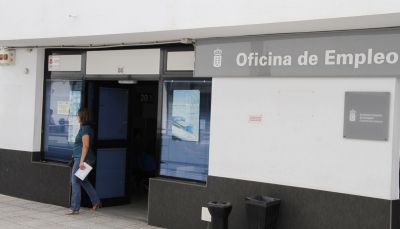
While almost 12,000 people are still registered as job seekers on the island, the main business associations say they are having problems filling many vacancies, due to the lack of "qualified personnel." From the Tourism Federation and Asolan, they attribute it in part to the people who left Lanzarote when they became unemployed, after the coronavirus crisis broke out, and who have not returned to the island.
In addition, they point to another structural problem that other business associations also warn about: the lack of training. In the case of the construction sector, the president of the Association of Construction and Developers of Las Palmas (AECP), María Salud Gil, places the origin in the economic crisis of 2008. "The construction sector, as it was in a brutal crisis, the Autonomous Community understood that it was not necessary to train anyone," she questions, stating that they already warned then that it was a mistake. "We said that in 10 or 15 years we were going to need this profile, just the profile we are looking for today," she emphasizes.
"If we have 20,000 unemployed in the construction sector, why is that personnel not joining the market?" asks the provincial president, who assures that this lack of prior training can be solved with a personalized analysis, knowing if there is "an affected social pathology," to treat it differently and thus "be able to certify their skills and join the market."
From the Association of Constructors of Las Palmas, they state that they have trained 15,000 people who are already working in the sector, in tasks such as "new technologies, energy efficiency, accessibility, robotics or 3D." "Today the sector is moving towards digital transformation and domotization," adds María Salud Gil.
Lack of personnel for kitchens, dining room and reception
For its part, Asolan warns of a lack of qualified personnel for hotel kitchens, as well as for dining room and reception. The spokesperson for the association, Francisco Martínez, emphasizes that Asolan has also been carrying out training and recycling courses for years, but considers that people "do not take advantage of the training opportunities they have had." In fact, he states that before the pandemic, the main problem was finding volunteers to take the courses and seminars, although he says that now "there is a willingness to participate."
Martínez even states that he does not believe "that there are people looking for work and not finding it," and even maintains that there are people who prefer to "use unemployment benefits" in the face of this "uncomfortable" situation. However, he hopes that the problems his sector is having to fill certain positions will be solved "in two or three months," since he attributes it to that conjunctural situation generated by the Covid shutdown and the workers who left the island.
In addition, like the construction employers' association, he defends that young people should train to join these sectors. Both the president of AECP and the spokesperson for Asolan defend the salaries paid in construction and tourism, despite the questions that the latter usually receives, especially. "The annual salary is around 20,000 euros," points out the president of the construction employers' association, while the spokesperson for Asolan assures that a chambermaid "earns a net salary of 1,300 euros," working 40 hours a week, and that as you move up in sectors such as bar or kitchen, along with the acquisition of experience, "salaries are more important."
On the other hand, from the tourism employers' association they maintain that some of the people who are invited to work in the sector "are bothered that the hotels do not close on weekends" and although the agreement grants two free days a week, "they do not like that they do not fall on Saturday or Sunday."
The majority of the unemployed only have primary education
Of the 11,977 people who were registered as job seekers in Lanzarote at the end of last October, only 604 had university studies and 496 had completed Vocational Training.
Of the rest, 7,257 had only primary education and 3,535 secondary education, while 85 have no studies of any kind, according to information collected by the Cabildo Data Center through the Canary Islands Employment Observatory.
Regarding the economic sector to which these unemployed belong, 933 came from construction, although they are not able to access the positions offered. In addition, there were 2,852 unemployed from the hotel industry, 2,020 from commerce and almost 5,000 from other branches of the service sector.


