Even though I get excited about any achievement of Spain and pride overwhelms me when I hear the national anthem, I do not lose the ability to recognize the weaknesses that we Spaniards have. Probably the most shameful of them is the historical recurrence of the coup d'état: no more and no less than ten in the last 100 years. Only Thailand and Peru surpass us with twenty-five and twelve respectively, since Chile ties us and Argentina follows us with seven.
A coup d'état aims to subvert the current legal system, violating the sovereignty and democratic will of the people and unilaterally imposing new rules.
The shame that we democrats feel for that unfortunate past of Spain should not lead us to ignore or forget it, as this would increase the probability of new and anti-democratic episodes. Especially if we consider proven a certain genetic-social tendency to coupism that we Spaniards and our Latin American descendants have. In that sense, that is, with the purpose of learning from the past to avoid making the same mistakes in the present and in the future, I list below and briefly the coup chronology of Spain:
1st-. 1923 Miguel Primo de Rivera. Military. 2nd-. 1926 Francisco Aguilera y Egea. Military. (Sanjuanada) 3rd. 1930 Fermín Galán. Military. (Jaca Uprising) 4th-. 1931 Francisco Maciá. Politician. ERC 5th-. 1932 José Sanjurjo Sacanell. Military. (Sanjurjada) 6th-. 1934 Luis Companys. Politician. ERC 7th-. 1934 Francisco Largo Caballero. Politician. PSOE 8th-. 1936 Francisco Franco. Military. 9th-. 1939 Segismundo Casado. Military. 10th.- 1981 Jaime Milans del Bosch-Alfonso Armada. Military.
However, there are Spaniards to whom ten coups d'état must seem insufficient, so they are preparing the eleventh. This is the case of the independentists of Convergencia Democrática de Cataluña CDC, Izquierda Republicana de Cataluña ERC and the Candidatura de Unidad Popular CUP.
In Spain, on 27-S ordinary regional elections will be held that Catalan independence describes as plebiscitary. Voters will not find ballots for yes or no, but ballots for seven political options to form the parliament of Catalonia. Therefore, there will be no plebiscite.
Once clarified that the regional elections of 27-S are not a referendum nor is any independence voted, it is demonstrated that what the independentists intend is a majority to later unilaterally declare independence and thus culminate the eleventh coup d'état in Spain. Regarding a possible independence of a part of Spain, we all Spaniards have to decide and we must do so in accordance with the procedure established in the current legal framework. (Is it possible for a part of Spain to become independent? Of course it is! https://www.lavozdelanzarote.com/opinion/sigfrid-soria/posible-parte-espanaindependice-supuesto/20150912151613101041.html)
Therefore, what is illegal is illegal no matter how many euphemisms are used. In addition, what is illegal has criminal, administrative and political consequences. But, let each one bear the consequences.
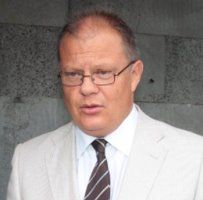
Sigfrid Soria del Castillo, Honorary President of the Popular Party of Spain in Costa Rica
Add La Voz de Lanzarote as a preferred Google source.
Stay informed with the latest current news.