
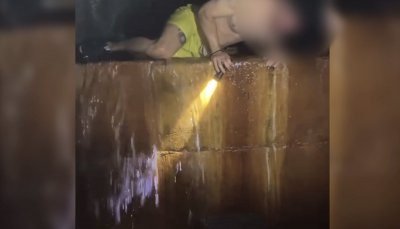
The Official College of Mining Engineers of the South (COIMS) has warned of the danger of entering without authorization into underground water galleries in the Canary Islands, especially in Tenerife, after detecting an increase in these practices by people who intend to share these incursions on social networks. A few weeks ago, a group of young people shared a video in Lanzarote, where they could be seen entering a water gallery in Famara, where access is prohibited.
The collection of underground water through wells and galleries is a historical practice in the Canary Islands, which has led to numerous kilometers excavated on the islands, where there are hundreds of these infrastructures.
These facilities, essential for the water supply of the population, industry and agriculture, can reach lengths of over 6,000 meters and "present extremely dangerous conditions for those who enter them without technical preparation or authorization." "The presence of toxic or asphyxiating gases, the lack of natural ventilation and the risk of collapse make these galleries high-risk areas, as established in Decree 232/2008, of November 25," recalled Juan Ignacio López-Escobar, dean-president of the Official College of Mining Engineers of the South.
The COIMS denounces the increase in people who illegally access these facilities and spread their incursions on social networks, ignoring legal warnings and endangering their lives and those of the rescue teams that could be forced to intervene.
“Hydraulic galleries are not scenarios for adventures. They are critical infrastructures that must be respected. We want to give a warning and make a call for sanity and common sense, both to the people who perpetrate these senseless actions and to the media, so that they contribute to raising awareness with seriousness and rigor about the risks and inconvenience of this type of event”, stressed Manuel Antonio Rubias, dean-delegate in the Canary Islands of the Official College of Mining Engineers of the South.
Likewise, the COIMS calls on the competent institutions, including the General Directorate of Emergencies, the General Directorate of Industry and the Island Councils, to strengthen the dissemination of the culture of water and the dangers associated with these practices, promoting greater citizen awareness.


