
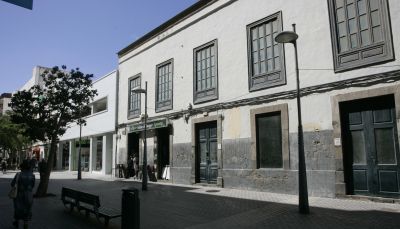
The Governing Council of the Cabildo de Lanzarote has approved this Monday, the project of regulatory bases for the granting of subsidies intended for the maintenance, conservation, restoration and rehabilitation of the cultural heritage of the island and La Graciosa.
These aids, which will be processed under a competitive bidding regime, will allow financing interventions in real estate included in island or municipal catalogs, declared Assets of Cultural Interest or that have accredited heritage values.
The president and counselor of Heritage of the Cabildo de Lanzarote, Oswaldo Betancort, explains that with these bases a clear framework is established to intervene in the built heritage of the island. The purpose of these, is not only to guarantee the conservation of heritage assets, but also, to establish a framework that facilitates owners and allows them to benefit from these”.
Betancort underlines that “at the same time, these bases adapt to the current regulations regarding heritage”.
Seven lines of action
The bases contemplate different lines of subsidy that cover from the drafting of technical projects to the execution of maintenance, restoration or rehabilitation works. Among them are included interventions in facades, roofs, historic ensembles or elements linked to traditional hydraulic heritage, such as cisterns or maretas.
The system establishes objective valuation criteria that will take into account aspects such as the level of protection of the property, its state of conservation, the risk of loss of heritage values or the scope of the proposed action.
The island president indicates that “this tool allows acting on existing heritage with technical criteria and with a regulated procedure that orders the granting of public aid.”
Likewise, subsidies may cover up to 50% of the cost of the intervention, with a maximum limit per action, prioritizing those that present greater patrimonial interest and need for intervention.


