
Since last Wednesday, all those who day after day approached the dock with curiosity to see the visitors arrive, know that they have lost a unique opportunity. "What happened has caused great desolation in Tarfaya because this line benefited it greatly, since it had previously been a marginalized and poor city," explains Mohamed Fadel, a journalist based in El Aiún. "The news of the accident was broadcast in the media and everyone is talking about what happened."
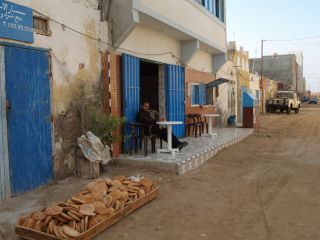
The Yara family, residents of Tarfaya, are also aware of the repercussions of an episode that they equate to the sinking of the "Titanic." A hundred meters from the pier is their modest business, where they make and sell all kinds of handicrafts to visitors. Mindo is 25 years old and has an open, traveling and dreamy spirit. "Yesterday you came to save us and today you have buried us," the young man reproaches the ship itself. "And today we can't do anything, just watch you sink and say goodbye forever."
Mindo remembers the illusions woven around the Fuerteventura-Tarfaya line. He speaks of "investments", "jobs", he speaks of "finally, a normal life, just like in any other city in the world." He also talks about his love, a young Mexican woman he has met through the Internet. This ship had also become the hope of a future union, a possibility of getting to know each other beyond the network.
FRUSTRATED DREAMS
"The importance of the line was due to commerce," explains Mohamed Fadel. "But we must also add that there are other affected: the inhabitants of Tantan, Glaymim and other cities that are north of Tarfaya, because many of those from this area work in the Canary Islands and frequent this maritime line to visit their relatives."
The incipient tourism has also been cut short for the inhabitants of Tarfaya, a city anchored in time that until now has turned its back on a kilometer-long beach with white sands, crowned by the Casa Mar, a centuries-old building now in ruins, which the English used to trade in the early 20th century. A beach that, without a doubt, would have a strong attraction for European tourists.
Just a few months ago, conversations in Tarfaya revolved around these tourists. On walks, in meetings around tea and on the terraces of their establishments, there was talk of possible businesses, of opening new shops and restaurants, of renting homes. To turn this city into a new tourist destination.
During these days, paradoxically, the inhabitants of Tarfaya have been able to observe from the threshold of their own doors what has never been seen before in this small city that does not exceed seven thousand inhabitants. "For the first time, there were emergency cars and three large planes flying over the city," explains Mindo Yara. "There were many police cars and even a helicopter."
ACN Press


