
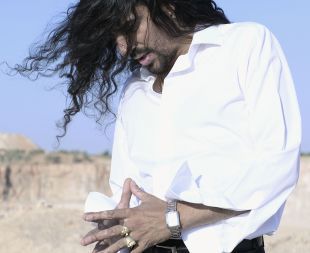
Although his name is Diego Ramón Jiménez Salazar, he is known as Diego El Cigala because, as he says, that is what the flamenco singers have always called him. The quality of this Madrid-born singer, who has dared to mix pure cante with other musical styles, is endorsed by the numerous awards he has won, including two Latin Grammys. The success of the album "Lágrimas Negras", performed with Bebo Valdés, opened a new musical path for him and made him known internationally. This Saturday, January 19, he will be at the Teatro de San Bartolomé from 9:00 p.m. with his show "Dos Lágrimas", in which, according to the musician, he makes "a journey through all the good things" that have happened to him. This concert, like the album "Lágrimas Negras", has been a success, as tickets sold out within hours of going on sale last Monday. Accompanied, among others, by the Cuban pianist Guillermo Rubalcaba and by the masters of Afro-Cuban percussion, Tata Güines and Changuito, he fuses flamenco, Latin jazz and copla.
Do you miss Bebo Valdés on this new album, following as it does in the wake of "Lágrimas Negras", which you created with the Cuban maestro?
Bebo is always missed because he is like a grandfather to me. But on a musical level I have felt very well accompanied.
You do have the collaboration of the Cuban pianist Guillermo Rubalcaba, how did you get along with him?
Well, because he knows the sound I'm looking for, the Cuban flavor of the 50s, since like Bebo he was forged in that era.
This time it's "Dos Lágrimas", however you say that in it you sing to all the good things that have happened to you in life. What are those good things?
My family and my music.
Have you ever cried while singing?
Many times, sometimes singing is crying.
Before this album, you recorded "Picasso en mis ojos", a work with which you returned to flamenco. Have you felt separated from it in these works marked by the Cuban son?
I always feel flamenco.
Do you think there is a limit to flamenco fusion?
The limits are set by each one, although flamenco is a rich music in itself that does not need any fusion to survive.
Which palo do you identify with and why?
With the Bulería because it encompasses all flamenco.
Your legal name is Ramón Jiménez Salázar, where does Diego El Cigala come from?
That's what the flamenco singers have always called me since I was young.
They say that in his fandangos you can feel his uncle Rafael Farina, have you ever thought of paying tribute to him with an album?
Yes, I have thought about it, and maybe one day I will.
To what extent does "Lágrimas Negras" represent a before and after in your career?
It gave me the possibility of reaching an international audience and opened a new musical path for me and for many other people who have followed it.
How is this second part going? Has it met expectations?
It has far exceeded expectations.
What does a classic like "Dos gardenias" or "Historia de un amor" sound like in your flamenco singing?
(Laughs). To "Dos Lágrimas".
Why shouldn't the people of Lanzarote miss the next concert you are going to offer in San Bartolomé? What do you give on stage?
On stage I give everything, that's why they shouldn't miss it.


