
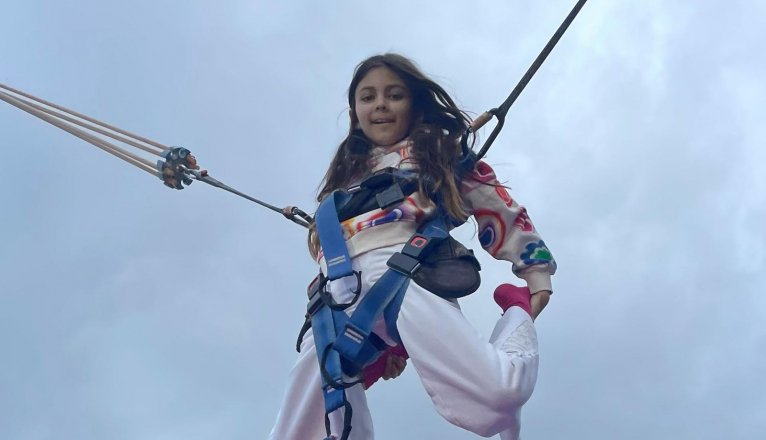
A wave of solidarity has responded to the request of Alma's family, a Canarian girl of eleven years old who was diagnosed with Fanconi anemia, a rare hereditary disease when she was only one year old and that causes the bone marrow not to produce enough platelets, which can lead to excessive bleeding. With half of her roots from Lanzarote and the other half from La Palma, this girl has grown up on the beautiful island and lives as normal a life as possible, attending school. Her parents had their third child Ángel, through in vitro fertilization and the stem cells of the little one served to save the life of his older sister Mar. However, Alma's case is more complex because the human leukocyte antigens (known as HLA and which are the DNA of the blood), of her brother are only 50% compatible. "It would be a harder transplant because the girl has to be depressed more, the chemotherapy that is put on her is greater and she has more risk of complications," explained her mother Anafer, who is a doctor, during an interview with La Voz just a few days ago.
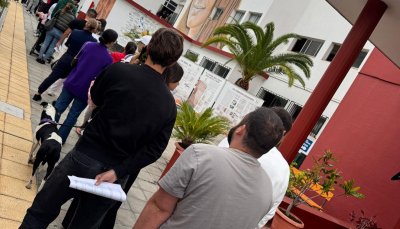
After the efforts of her family to raise awareness among the population of the importance of donating bone marrow, they have had a pleasant surprise. A week ago, around 600 people came to the IES Eusebio Barreto Lorenzo de Los Llanos in La Palma to get blood tests and register in the world bone marrow donor bank. "It was very exciting," her mother now says in statements to this medium. More than six nurses, two doctors and several teachers who helped manage the influx of donors moved to the educational center.
In transplanted people there is a risk of suffering from graft-versus-host disease, a complication that occurs after receiving a bone marrow or stem cell transplant and that can be fatal. When there are allogeneic transplants, where the transplanted person receives stem cells from a donor and not their own cells, this risk may arise, which is why it is very important to ensure that the donor is a highly compatible person.
How to become a bone marrow donor?
The regional coordinator of Transplants of the Canarian Health Service, Gemma García, explains that "the probability of finding a donor within the family is only 25%" and that to face the lack of donors there is a World Bone Marrow Donor Registry.
To be able to donate bone marrow you must be between 18 and 40 years old. Interested people should enter the website canarias.medulaosea.org and fill out the registration form where different personal data and possible diseases that may be contraindicated to be a donor are asked. The entire process is anonymous and altruistic, you cannot select which specific person you are going to donate to.
"Once that registration is completed, the autonomous transplant coordination contacts the user to complete the registration and take a small blood sample," says Gemma García. This extraction, which is carried out on all the Canary Islands, including Lanzarote, is a blood test of histocompatibility antigens, which allows obtaining the DNA of the blood and "assessing the compatibility between the recipient and the donor". After that, a person can officially become a bone marrow donor and enter the World Registry.
More than 42 million donors in the world
The World Donor Registry has 42 million people registered to donate and "if at some point someone is compatible with your bone marrow, then a series of more specific serology, immunity and other tests are done to be able to reach that extraction", continues the coordinator of Transplants in the islands. According to data from the Ministry of Health, in Spain there are already half a million bone marrow donors. Despite these figures, currently people who need a donation have a 1 in 3,500 chance of finding their donor in the world registry. "The more the merrier," encourages Gemma García.
Before, to donate bone marrow you had to prick the hip bone, but now it can be done by apheresis, a process to extract stem cells or other components from the bloodstream while the rest of the blood is returned to the body. This procedure, less invasive than the previous one, "entails a recovery for the donor much faster, much less painful and with many fewer complications", with medical leave of around a week.


