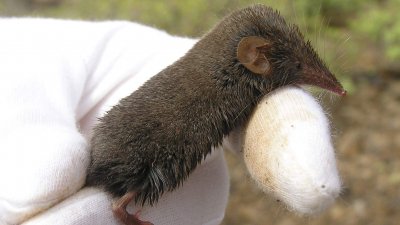
The unknown and threatened Canary shrew has been studied during the last year by GREFA with the aim of expanding knowledge and disseminating the situation of the species. With grayish fur, an elongated snout in the shape of a small trunk and a tiny size (it weighs about six grams, the same as a candy), the Canary shrew is the only endemic mammal exclusive to the eastern Canary Islands: it is only present on the islands of Lanzarote and Fuerteventura and the islets of Montaña Clara and Lobos.
With discreet habits, mostly nocturnal and underground, it feeds mainly on invertebrates such as insects, larvae and snails, which makes it a key piece of ecosystems and an ally of farmers. It can also hunt small vertebrates thanks to a paralyzing compound in its saliva.
The Canary shrew is included in the Spanish Catalog of Threatened Species and worldwide it appears on the IUCN Red List, with the category of "Endangered". In order to have the best information that makes possible the effective conservation of this living treasure of the Canarian and Spanish fauna, GREFA has worked on the development of a protocol for continuous monitoring of the species in its natural habitat. Due to its interest in being applied to other species, the results of this study were presented by GREFA at the Symposium of African Micromammals that took place from September 17 to 22 in Swakopmund (Namibia).
The ultimate goal of this study is to contribute to the conservation of the Canary shrew through a monitoring and surveillance system that serves to detect in time the areas where the species is disappearing and adopt the necessary management measures based on the data obtained. A priori, the use of phytosanitary products (especially insecticides), attacks by cats (both domestic ones not controlled by their owners and feral ones) and the danger of certain abandoned containers (shrews enter them out of curiosity or attracted by odors and then cannot get out) are considered its main threats.
The competition for food and shelter with introduced species such as the house mouse, the Barbary ground squirrel, the North African hedgehog and the black rat, as well as the fragmentation and disappearance of its habitat, due to the construction of roads and other large infrastructures and urban expansion, also harms the Canary shrew.
Generalized trapping
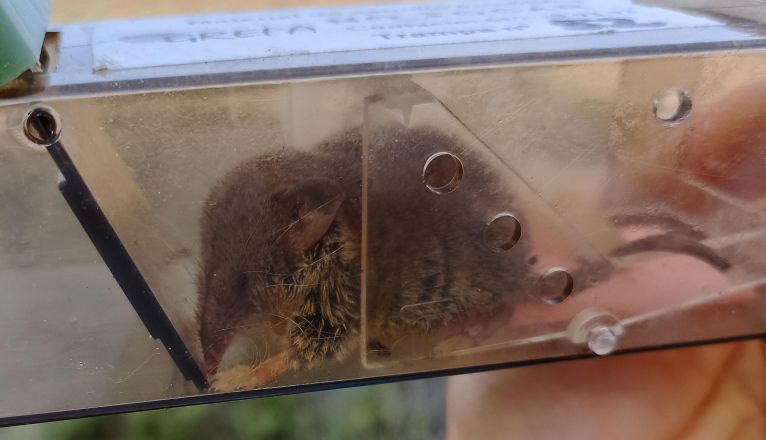
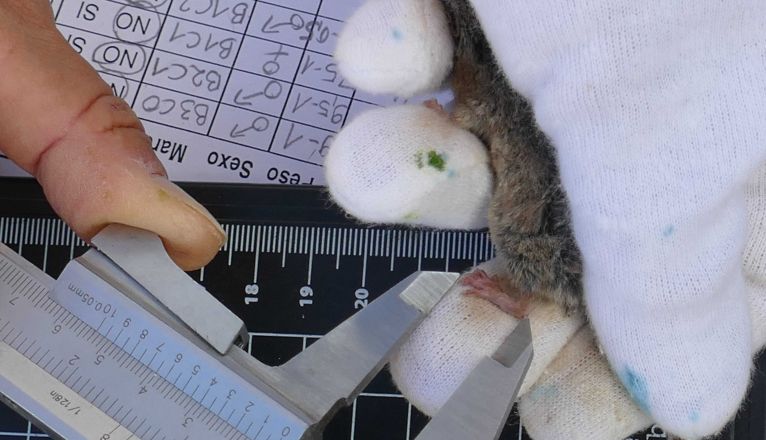
GREFA, which in 2020 and 2021 already carried out the field work necessary to prepare the Conservation Plan for the Canary Shrew on behalf of the Canary Government, has carried out a series of actions in recent months, including for the first time trapping on all the islands and islets with the presence of the species.
For these captures, carried out exclusively for scientific reasons and which involve the immediate return of the studied specimens to their natural habitat, GREFA has the collaboration of the SEMICE Program (Monitoring of Common Micromammals of Spain), coordinated by the Museum of Natural Sciences of Granollers (Barcelona) and the Spanish Society for the Conservation and Study of Mammals (SECEM).
The financing of CaixaBank and Fundación La Caja de Canarias has also allowed the development of outreach activities to publicize one of the most unknown threatened species of Spanish fauna, "something extremely important in order to involve the inhabitants of the towns near the areas where populations of Canary shrew are known", says biologist Claudia Schuster, in charge of the GREFA project on the Canary shrew.
We can all help
"We are talking about a protected and threatened mammal that if it disappears from the Canary Islands, it disappears from the entire planet, which gives us an idea of the great responsibility in the first place of the competent administrations in the matter, but also of society, since we can all help in its conservation", says Schuster.
The biologist proposes some actions for the benefit of the Canary shrew within everyone's reach: "Control our cats, take bottles, cans and other containers to the container, avoid the use of insecticides, demand measures that facilitate the transit of shrews through the roads and position ourselves against the growing human occupation of the natural habitats of this unique species".
Add La Voz de Lanzarote as a preferred Google source.
Stay informed with the latest current news.