
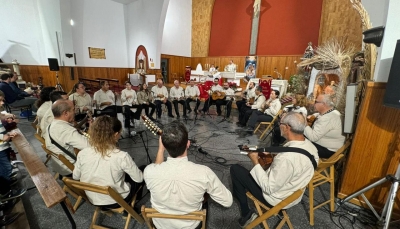
The municipality of Haría, like all those on the island of Lanzarote, has enjoyed this folkloric - religious mode, of the so-called 'Ranchos de Pascuas', and there are many people who over the years have been integrating into them formed in their beginnings by enthusiastic men from each town, now also counting on the presence of women.
As explained by Gregorio Barreto Viñoly, 'Official Chronicler of Haría', who died in December 2020, in the municipality there were at one time three Ranchos de Pascuas, one of them located in the town of Haría, another in the town of Máguez and a third in the town of Mala.
Last Christmas Eve, the residents of Haría gathered at 7:30 p.m. in the main church of Nuestra Señora de la Encarnación to participate in the celebration of the Eucharist, presided over by the incumbent parish priest Norberto Medina, and the participation of the Rancho de Pascua de Haría. They began their performance with the entrance to the church, walking down the central aisle until they were very close to the Main Altar, carrying out during the celebration the songs of the special liturgy for Christmas Eve, interpreting the popular carols at the moment of the 'Besapiés'. At the end of the Eucharist in the square they continued with their performance, counting on the complicity of the neighbors who also joined their voices and wrapped them with their applause.
As Gregorio Barreto Viñoly clearly reflected in his chronicles, the Ranchos de Pascuas were and still are today a living manifestation of folklore, apart from the fact that they were the same ones who performed in the candle dances that used to be held in some private houses, first on Sundays and then on Saturdays, apart from other folkloric manifestations. In general, both Haría and Máguez, people were prepared to receive the Ranchos de Pascuas in their homes, and if they had dried figs and pork, they would invite them, including a glass of wine or anise.


