Silverio Campos is a social worker, was born in Algeciras and has always worked in social affairs, especially youth and citizen participation.
In 2014, he/she joined the Lanzarotean association Trib-Arte, formed by a "team of professionals from the educational, social, and artistic fields that offers creative solutions to institutions and companies."
Among other initiatives, Campos leads the project Chingafa focused on recovering degraded agricultural lands and promoting agroecological agriculture in Lanzarote.
Chingafa is one of the seven projects aligned with the objectives of the Biosphere Reserve that have received the support of the Cabildo de Lanzarote for initiatives of non-profit associations in 2026.
In the project participate young care leavers and people at risk or in social exclusion to strengthen their integration and improve the possibilities of generational replacement in the Lanzarotean countryside.
The word chingafa is at the same time “a tribute to the largest town buried by the volcano, Tingafa, and a nod to the mistake in the transcription in Madrid of the National Park, which was actually called Chimanfaya”, explains Campos, who had the advice of archaeologist José de León, alias Pepe el Uruguayo, to choose the name.
The eruption of the volcano "took away the richest cultivation area of the island," Campos completes.
A farm in Tiagua and another in La Geria
The Chingafa project, in which ten boys and two girls currently participate, was born in 2020, just before the declaration of covid. “We were very lucky because thanks to that the boys were able to train and were able to work,” explains the project coordinator.
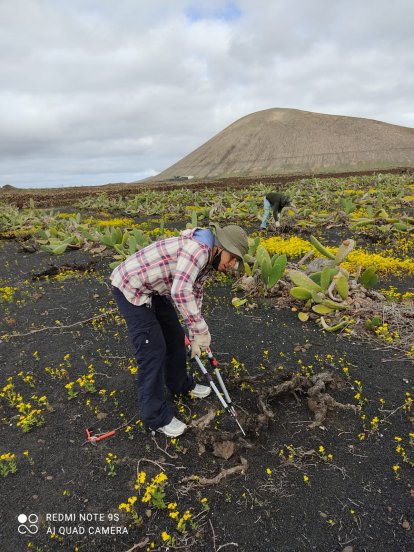
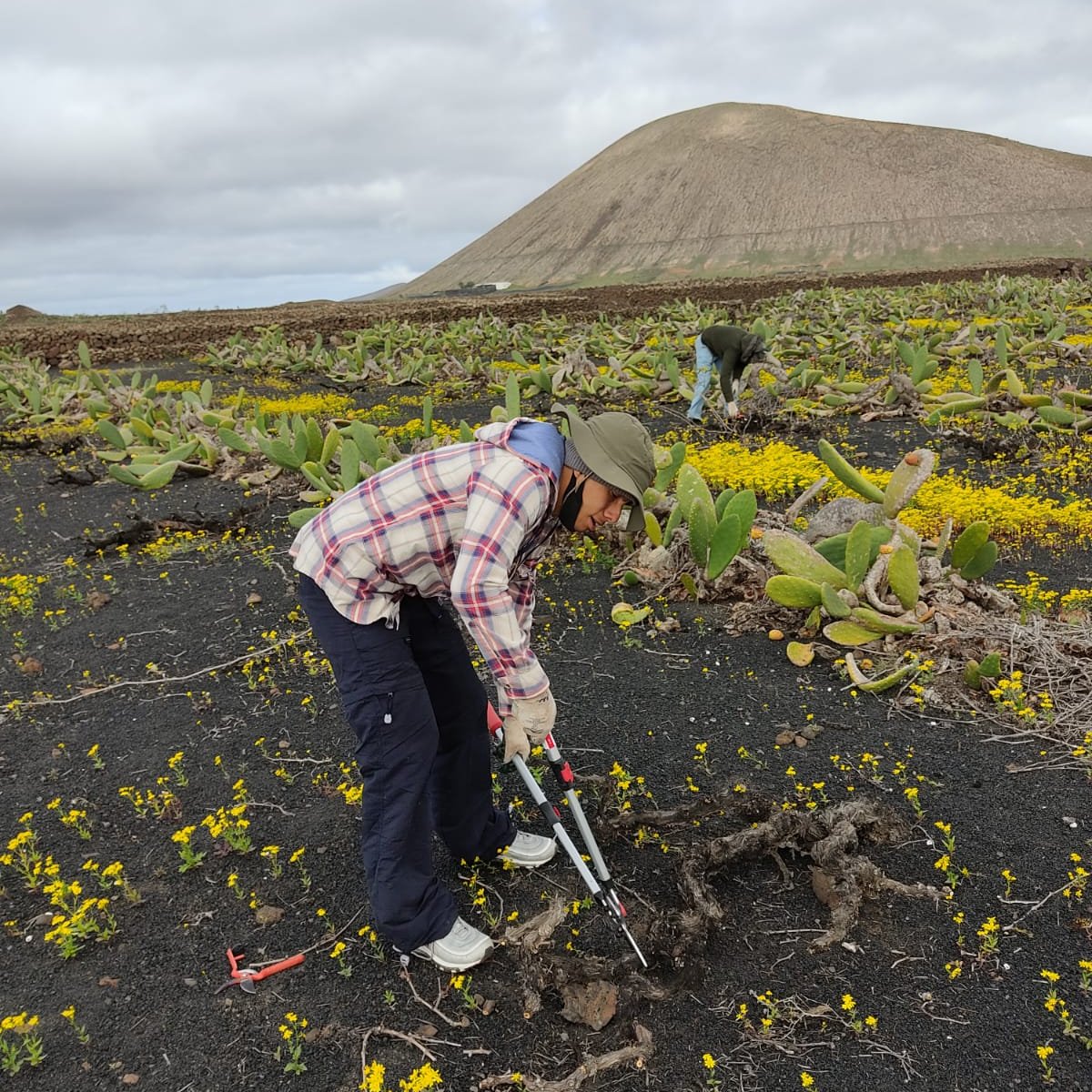
“We are currently working on two plots of land, one in Tiagua, of 1.5 hectares, which had had intensive land use and a lot of chemical product, and another in La Geria, of two hectares, which had been abandoned for many years,” shares Campos.
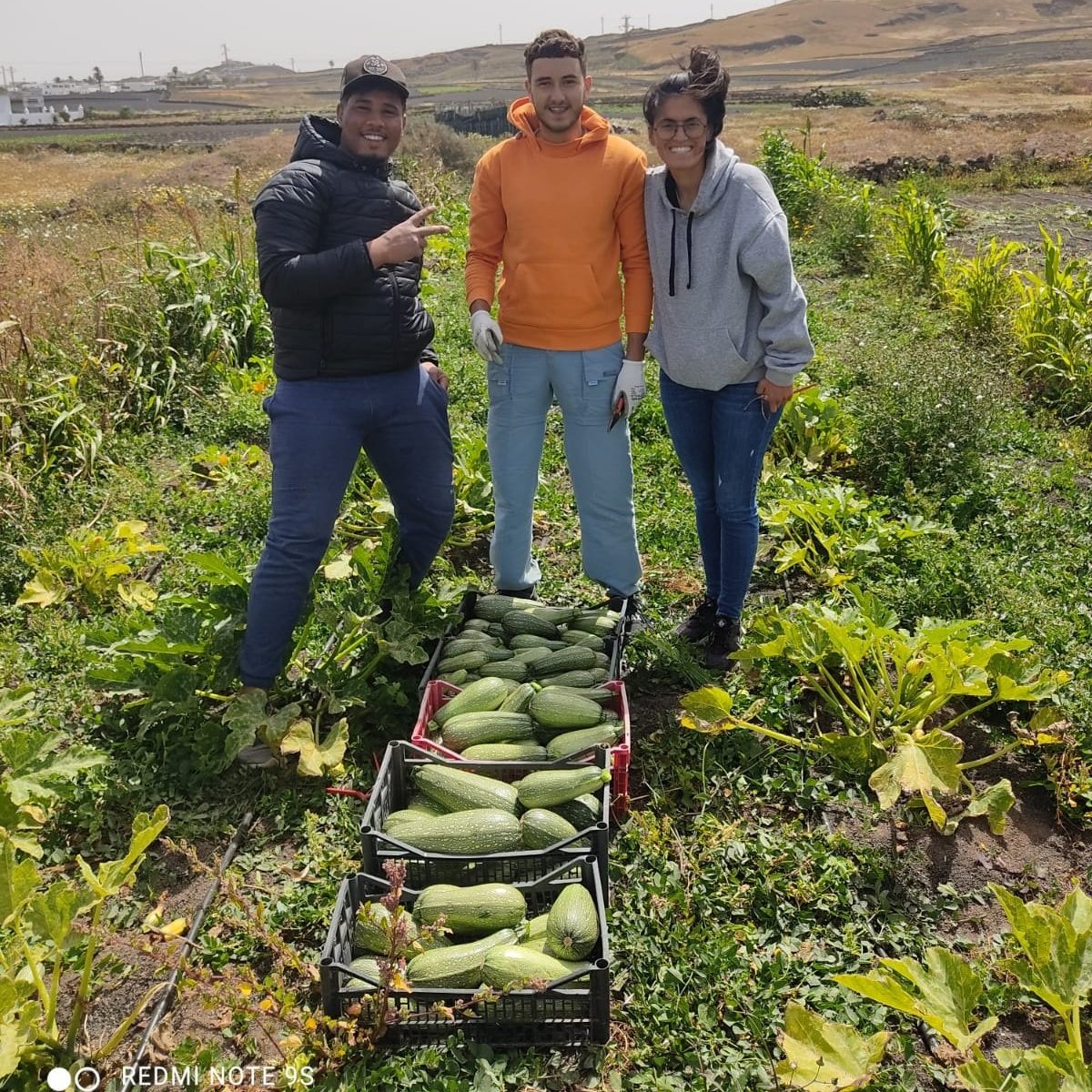
In the first one, they have mainly planted sweet potato, but also pitaya and some legumes, zucchini and eggplants, always with traditional seeds. “We also have what are called biodiversity islands with flowers that favor pollination and the presence of different types of bees”.
Campos warns that he is not an expert in agriculture, but for the project he has the advice of Rafael Torres, from the Participa association, with which they collaborate, although he seems to have learned a lot so far in the project.
“Agroecology is not only about not using chemical products, but also about achieving soil regeneration so that it has life, taking advantage of traditional knowledge and culture, being a circular process in accordance with nature itself, with a variety of crops, and incorporating waste back into the land.”
In the land of La Geria, they have traditionally planted vines. The grape is sold to wineries to support the project, and the rest of the production either goes to self-consumption or also serves to finance Chingafa.
“We are part of Sociedad Agraria de Transformación (SAT) El Jable which works for sustainable, circular and zero-kilometer agriculture”.
"There are many pros to working in agriculture"
Regarding Chingafa's contribution to national and migrant youth who are or were protected by the administration, being able to find employment, Campos believes it opens "a job opportunity for people who do not meet the job requirements of the service sector, which requires an energy and a focus that not all people have."
“There are people who need other times and other ways to communicate with other people and with the world. For those people, working in the field suits them very well. Then there are people who unfortunately do not have a work permit and thus can train themselves,” shares the Social Worker.
“In the countryside, you earn less than in the service sector and it is considered harder work, the connection with nature is very positive, you can have a good schedule, there are many pros within agriculture”.


Add La Voz de Lanzarote as a preferred Google source.
Stay informed with the latest current news.