
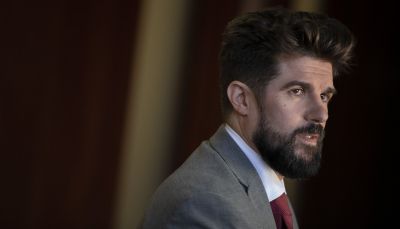
David Padrón, General Director of Research and Coordination of Sustainable Development in the Canary Islands Government, is the economist who, at the head of that regional department, within the organic structure of the Government Presidency, is today in charge of channeling and managing, in a transversal way, all the work related to the creation first and the implementation later of the Canary Islands Sustainable Development Agenda (ACDS): the United Nations 2030 Agenda adapted to the reality of the Archipelago.
In this interview, Padrón analyzes the consequences that the COVID-19 pandemic has had on the initial programming of the work of preparing this roadmap towards greater sustainability and explains what the situation is today and why now, in this situation of health, economic and social crisis, the regional government's commitment (which is based on a progress pact) to the 2030 Agenda is even more necessary; it is much more justified if possible.
To what extent do you think that the COVID-19 pandemic has changed or should modify the UN's 2030 Agenda (in force since January 2016) and what has already been planned and budgeted in the Canary Islands for its regional development? Do you consider that the new socioeconomic and health situation will imply changes in the contents of the current 17 sustainable development goals (SDGs) and their 169 global targets?
As the Secretary General of the United Nations (UN), António Guterres, recently pointed out, the COVID-19 pandemic should serve to draw lessons that allow us to reorient our decisions and actions to do things better, with the focus on trying to solve the great global challenges and problems.
Along these lines, I dare say that the 2030 Agenda is more relevant now, after the health crisis, than before. In addition, we must celebrate that we have this inventory of global goals and targets because it constitutes an adequate compass when designing and implementing the measures of the recovery plans of the different national, regional and local governments.
The 2030 Agenda was approved by the United Nations General Assembly on September 25, 2015, and entered into force on January 1, 2016. More than two years of work and analysis, and an unprecedented participatory process on a global scale, were left behind. The only thing the 2030 Agenda does is establish the objectives (SDGs) and the goals that we must try to meet on a global scale if we want to be effective in correcting some of the most pressing environmental, social and economic challenges in the world.
If the COVID-19 pandemic has reminded us of anything, it is that we have long been operating in a global syndemic, and that confronting it requires, as proposed by the United Nations through its 2030 Agenda, a commitment to the principles of sustainability and resilience. It is, therefore, an agenda that marks some of the priorities that must be internalized in the medium and long-term roadmaps of countries and regions, their governments and, in general, their agents and citizens. Its vocation is not short-term or conjunctural action; it is structural, aspiring to change the structural parameters of our systems, in such a way that we are capable of achieving a balanced development in environmental, social and economic terms. This balance is what is understood by sustainable development.
With the new planetary, Spanish and Canary Islands situation, when is the draft of the ACDS expected to be finalized and presented?
As you know, we began the process of preparing the future ACDS in September of last year. Since then, we have been working, first, on aligning the political agenda for the tenth legislature with the SDGs and the global goals of the United Nations, and second, on localizing or landing the 2030 Agenda in the specific reality of our region.
In February 2020, we had a first document that summarized the work carried out by the different departments since September 2019. We planned to discuss this document in the first working session of the Horizontal Coordination Committee (CCH), which is responsible for the design of the ACDS and in which all the departments and autonomous bodies of the regional government are represented. The scheduled date for this first meeting was March 9, but it never took place due to the health situation at the time [the first state of alarm was decreed on March 14].
The emergence of the pandemic and the subsequent social and economic crisis has forced us to concentrate the efforts and energies of public officials and civil servants of the Canary Islands Government, first, on the shock actions to address the emergencies of the new scenario after COVID-19, and then, on the design of the Plan for Social and Economic Reactivation, which contemplates not only actions for the remainder of the year, but also those that we must implement in the coming years. This last package of measures must be aligned with the 2030 Agenda, with the ACDS.
Given the epidemiological situation in which we are operating, which continues to advise against simultaneously bringing together all the members of the CCH (more than 60 people), during the months of June and July we opted to hold a total of 16 working sessions with the different ministries and management centers of the regional government to finalize a very preliminary first document, with the aim of being able to deliver it to the public and open the participatory process.
Thus, towards the end of September we hope to close the participatory process for the elaboration of the ACDS. Subsequently, we will transfer these contributions to the CCH and to all the management centers of the Government, so that they can study them and incorporate them into the ACDS. If we have no further setbacks, we hope to have the ACDS 2020-2023 designed and approved before the end of this 2020.
Has the guide that was being worked on for the island administrations been modified? Is there much left to complete the Canary Islands Sustainable Development Network?
A central element in the process of elaborating the ACDS is participation. The councils and municipalities are invited to this process, through the Fecai and the Fecam. We still have a working session pending, prior to the holding of the forums, in which the Vice-Minister of the Presidency, Antonio Olivera, and I will explain firsthand and in detail the steps we have taken, and the roadmap with the actions that still remain until the conclusion of this process. It will be then when we will call on the three levels of Public Administration to work together in the process of drawing up a practical guide for the design and implementation of the 2030 Agenda at island and municipal levels. The idea is to create a space for collaboration in which to share experiences; that the regional government and those municipalities and councils that have already begun the process of localizing the 2030 Agenda in their respective realities share with others the knowledge acquired... Thus we will draw up a summary document that will make it easier for others to follow this path.
As for the Canary Islands Network for Sustainable Development, it aspires to become the meeting place for all stakeholders or interest groups. Since last June, we have begun the necessary tasks to identify the key stakeholders (those who will participate in the process on their own behalf and on behalf of the citizens, collective, organization or institution to which they belong) and what we have called local agents of change (who, regardless of whether they participate in the process, are currently working on projects and/or actions that contribute significantly to the achievement of the SDGs in the Canary Islands). These agents will be those who make up the future Canary Islands Network for Sustainable Development, which we hope will become a key element for the promotion, monitoring and evaluation of the ACDS.
Since its arrival in the regional government, and beyond the Canary Islands Strategy approved at the end of the previous legislature by the Parliament, not by the previous government, the progressive Executive of the Islands has defined sustainable development and this Canary Islands 2030 Agenda as one of its priorities: has this commitment been somewhat weakened by the new situation or, on the contrary, does it make more sense than ever and must it be accelerated to the maximum?
As I pointed out earlier, many people understand that the 2030 Agenda, its 17 SDGs and its 169 targets, make more sense today than ever before. In the regional government we share this vision. This approach, moreover, is shared by other agents, as evidenced by the fact that the elaboration of the ACDS has been included in the Pact for the Social and Economic Reactivation of the Canary Islands [and in the development of its action measures: the subsequent Plan], signed on May 30, as one of the strategic priorities that we must address.
The 2030 Agenda should serve as a guide for the measures of the corresponding Reactivation Plan; the ACDS should serve to ensure that the reactivation is reorienting. We understand that the 2030 Agenda continues to be a valid roadmap for the post-COVID era, and its regional implementation, the ACDS, should be our compass in the coming years.
The new Comprehensive Employment Plan of the Canary Islands (PIEC), whose Canary Islands-State agreement was signed this August with 42 million euros for 2020, provides five million for an extraordinary project of ecological transition together with the councils. It is an initiative to hire unemployed people in activities integrated in the green and circular economies. Is this one of the ways forward?
Despite the fact that the ACDS process has not yet been finalized, this is a good example of how its spirit is already beginning to permeate the political action agenda, of how the measures of the Reactivation Plan for the COVID-19 crisis can and should be reconciled with the values of sustainability and resilience that the future ACDS intends to promote.
The Extraordinary Employment Plan for Ecological Transition is a concrete example of action aligned with the aspiration to establish a new strategic framework in projects generating employment in the field of energy and climate, renewable energies, new environmental models. It is also the desire to implement measures in the field of environmental sustainability that have at the same time an economic and social impact. In this case, through the hiring of people. I believe that it also constitutes a good example of a way to promote the diversification of the productive fabric. But, beyond the specific actions, the truly important thing is to have a well-armed strategy, and to finalize the ACDS and its corresponding action plan as soon as possible.
The Plan for the Social and Economic Reactivation of the Canary Islands due to the consequences of the coronavirus also includes an express point of promoting the ACDS. Are there not many separate plans or actions or will they all be hybrid actions, shared and coordinated within the Government itself and with other administrations and private entities? Should they all be in a single plan or will overlaps be inevitable?
Since the beginning of this legislature, the General Directorate of Research and Coordination of Sustainable Development, in collaboration with the other departments of the Canary Islands Government, has been working on the correct alignment between the commitments acquired in the Government Pact and the ACDS. Now, after the COVID-19 crisis and the signing of the Pact for the Social and Economic Reactivation of the Canary Islands, a new document comes into play that will be equally aligned with the previous ones.
Moreover, we must remember that the so-called Progress Pact already established that the 2030 Agenda would constitute the backbone of all government action during the tenth legislature. Similarly, the Reactivation Pact establishes as one of its strategic priorities the localization of the 2030 Agenda in the specific reality of our archipelago, and given the transversal nature of the United Nations Agenda (also in its Canary Islands version), this obliges us to ensure that the principles of sustainability and resilience permeate the rest of the priorities, measures and actions of the aforementioned Pact and its development as a Plan.
Undoubtedly, the task is not easy, and undoubtedly numerous contradictions or conflicts will appear that we will have to manage. But the commitment to promoting sustainable development is still alive, and the Reactivation Plan must bear witness to this.
Aren't you afraid that many social sectors, those most affected by the pandemic economically, will now move away from sustainable development because they link it to a brake on growth? Is there still a lot of didactic effort to be made to differentiate between growth and development? Will we continue to talk only about GDP per capita without a global or regional ecological perspective, without paying attention to the sustainable distribution of wealth, equal opportunities and social justice?
The current situation can be interpreted by some people as unfavorable to the introduction of changes, including those aimed at promoting sustainability. That this "is not the time". As an acquaintance told me through social networks after the declaration of the state of alarm: "We will return to that of sustainability and the SDGs when all this is over".
In my opinion, such statements denote at least two inconsistencies. The first is that short-term policies, including measures included in shock and reactivation plans, can and should be aligned with medium and long-term policies, with the future strategy of the organization that must implement them. The second is that the 2030 Agenda for sustainable development is not a package of actions different from the rest of the political agenda. The 2030 Agenda should be seen as the guide that orients the design of government action; it should be transversal to all government action.
After decades of worshipping GDP and its rate of progress, we have assumed that all economic policy measures must be aimed at increasing its value, and we do not question this, even when a health crisis breaks out. What is now being highlighted are precisely the obvious limitations of GDP as an indicator of a society's level of well-being, of its level of development. What is now being proposed is that public policy actions should be aimed at simultaneously guaranteeing material prosperity, social well-being and equity, and also environmental sustainability. The objective function is broadened, now including more objectives, all equally important, unavoidable.
Just as there are COVID-19 denialists, although they are a very small minority, do you think there will now be more people who deny climate change because of this economic pressure or will they tend to be increasingly residual?
Without a doubt. And that is why awareness-raising, training and capacity-building policies are fundamental. Likewise, just transition policies that minimize the inevitable costs of change and accelerate the materialization of the equally indisputable benefits, also economic.
Deniers of social inequalities, of their nature, dimension and scope have existed and will continue to exist; deniers of the environmental emergency, and not only climate change, continue to manifest themselves and hold forth; deniers of COVID-19 demonstrate in the streets and boast about it in the media, including social networks. Even today there are still deniers of the roundness of planet Earth (it is actually shaped like an oblate spheroid).
Although I find it very difficult to understand how it is possible that even today there are people who defend these positions convinced of their veracity, after having read the book Sapiens. A Brief History of Humankind, by the Israeli historian Yuval Noah Harari, and specifically his risky theory with which he interprets that the agricultural revolution has been "the greatest fraud in history", I cannot but value what the media disseminate as evidence in favor of Harari's hypothesis.
However, and without intending to cover all the possibilities, I am convinced that a not inconsiderable proportion of those who position themselves in these postulates contrary to empirical evidence do so not out of ignorance, but out of interest. As the American writer Upton Sinclair once pointed out, it is tremendously difficult for a man to understand something when his salary depends on his not understanding it. These groups also have a great capacity to construct alternative and attractive narratives with which to confuse public opinion and generate confusion.
In about five years' time, where should the Canary Islands be in terms of sustainable development compared to the rest of the Spanish communities, bearing in mind that the Islands are among the three worst (along with Murcia and Andalusia)? And in 10 years' time, in that reference year 2030?
Considering the available indicators, the Canary Islands are among the economies with the worst standards in terms of environmental, social and economic sustainability. The aspiration behind this Government's roadmap for the tenth legislature is to initiate a new path that will lead us, between now and 2030, to a much better scenario, compatible with the principles of sustainability (in its triple dimension) and resilience.
We are currently finalizing the diagnostic study on SDGs at regional level, and we hope to have completed the table of indicators for monitoring the commitments acquired in the future ACDS, in order to be able to assess the degree of contribution of our region to the fulfillment of the objectives set by the United Nations in its 2030 Agenda.
I don't think the aspiration should be so much to move from fifteenth place by autonomous community to fifth place, but rather to establish clear, realistic and demanding objectives in terms of sustainable development, and also to arbitrate a political action agenda adapted to the reality of the Canary Islands that allows us to comply with them. I believe that this is the best way to contribute to the well-being of our society and to the achievement of the United Nations' global objectives. The natural result of this process should be that the gap that separates us from other regions that are doing better than us today will narrow. But that will be an inevitable result of having done things well.
This commitment of the Canary Islands to integral sustainability must also become a tourist attraction. Is this the case? Therefore, should the effects of the coronavirus also be seen as an opportunity in search of this sustainable tourism, and not so much mass tourism?
Undoubtedly. The commitment to sustainability is also good news for the tourism sector and the improvement of its competitive standards in the medium and long term. But I also dare say that the Canary Islands will fail miserably in its attempt to move towards an environmentally, socially and economically sustainable model if it does not have the leadership, drive and decisive commitment of the sector that brings together the largest percentages of production and employment, both directly and indirectly.
The COVID-19 pandemic did not bring us this lesson. For years we have been observing movements in the tectonic plates of the sector on a global scale that suggested that changes were taking place in the weighting of the key parameters of competitive success, giving greater relevance to those closer to sustainability. I understand COVID-19 as a catalyst for these changes; I believe that what it will do is accelerate them. The Canary Islands should not resist and, instead, should lead this transition. Otherwise, we will pay for it in the future, also in a strictly economic sense.
COVID-19 also brought us a tsunami of webinars. I would like to highlight one organized by the Fyde-CajaCanarias Foundation and the CajaCanarias-Ashotel-ULL Tourism Chair, held last April and entitled Reflections and perspectives of tourism in the Canary Islands for the way out of the COVID-19 crisis. Of the many valuable reflections that were contributed in that session, I would like to share, because of its timeliness, one launched by Professor Carlos Fernández: "The Canary Islands, to be healthy touristically, cannot be only tourism". In that same session, Professor Fernández invites us to reread "everything we have on mass tourism in the Canary Islands".
Once the Canary Islands 2030 Agenda has been approved, what should be the oversight of the actions and who should exercise it: civil society as a whole, specific agents, governments in order to be able to sanction...? Will there be measurement of the objectives achieved and continuous advice on the initiatives to be followed? And the role of basic training and education?
Citizen participation is a key element in the process of drawing up the ACDS, the phase we are currently in. But it will also be key in the process of promoting the Agenda, which must be subject to continuous review. It is, in short, a living document that must accept the inclusion of new contributions. To this end, it is equally essential to establish appropriate review mechanisms and protocols, as well as to have a sound table of indicators to be able to evaluate the degree of achievement of the objectives set. From the General Directorate of Research and Coordination of Sustainable Development we are also working on these aspects, which will form part of the action plan of the future ACDS.
What should weigh more heavily, ecological awareness and education or punitive measures? The coronavirus seems to show that sometimes some people only pay attention to fines...
There is abundant evidence of all kinds on the crucial role played by institutions in the achievements of societies and the behavior of societies and the individuals that make them up. Institutions are a key element for understanding the links between social systems and the ecological systems they use. And one of the outstanding lessons from these analyses is that formal institutions (which, to summarize, we can understand as laws, regulations and written rules) that are not supervised and/or whose compliance is not ensured are completely ineffective; they do not serve to shape behavior in the intended way, they fail to modify behaviors that adversely affect ecological systems or those that generate social imbalances.
Similarly, there is overwhelming evidence that normative transplants, even when supervisory and sanctioning mechanisms are put in place in case of non-compliance, tend to generate rejection and be equally ineffective if they are not properly aligned with informal institutions: culture, tradition, etc. For this reason, I understand that achieving permanent and effective changes necessarily involves awareness-raising, education and training policies. Undoubtedly, this is a more costly area of action and, above all, one that implies moving in longer time horizons, but, if properly implemented, more lasting, permanent and effective changes are achieved, while minimizing the need to develop convoluted systems of rules and complex and costly supervisory and control mechanisms.
What will the Canary Islanders of 2050 reproach the Canary Islanders of 2020 for if we do not do things differently from now on in terms of sustainability?
I honestly don't know. But I do know what I have reproached in the past and will continue to reproach in the future: disregarding the abundant scientific evidence that unequivocally points to the numerous social and environmental challenges facing humanity as a whole and, in particular, our society; that those people with sufficient intellectual capacity to understand the seriousness of the current moment stand by and even help to construct (fictitious) narratives that sweeten reality; that those people with the political capacity and influence to bring about social changes in the direction demanded by the current context stand by or prefer to entrench themselves in the comfort of defending the status quo and inertial movement. What I fear is giving rise to the possibility that in the future I may be subjected to these same reproaches.
Do you fear a Canary Islands with different speeds in terms of sustainability between the different islands from 2030 onwards?
I fear a Canary Islands with marked differences in terms of the degree of commitment to sustainability. I am one of those who believe that one of the great successes of the United Nations 2030 Agenda is that it has set objectives and targets in global terms. Firstly, for reasons of political operability: it would have been impossible to have the support of 193 countries, with very different levels of development, if more specific targets had been set, which might have been perfectly suited to certain societies but would have left out many others. Secondly, because the United Nations, by setting objectives in global terms, is telling us that all countries and regions, all agents and organizations, are called upon to contribute to their achievement. And that the best way to do this is to adapt these objectives and targets to our specific reality; that is, we are all called upon to localize the 2030 Agenda.
In the specific case of the Canary Islands Government, this localization exercise will translate into the future ACDS and its corresponding action plan. This same exercise can and should be carried out at island level (led by each council) and municipal level (led by each town council). Therefore, each region and each agent must adapt the 2030 Agenda to its particular circumstances and capacities, its objectives and targets. For this reason, I do not believe that we should look askance at the existence of different strategies or roadmaps, at different speeds. What should concern us is the absence of clear commitments to achieving these objectives and targets.


