
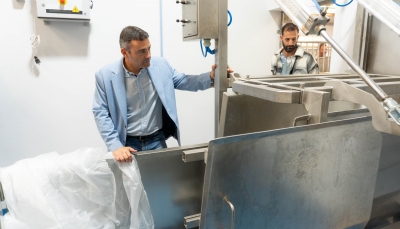
The Lanzarote Island Slaughterhouse reopens this Monday after the completion of the modernization works, a project financed with FDCAN funds with which it manages to fully adapt this service to European health regulations.
The project not only adapts the facilities to current community regulations, "which it had been violating for more than 14 years", but also puts an end to the serious deficiencies that caused multiple Public Health requirements. “With this project we have corrected the serious infractions that had been dragging on for more than a decade, and the Slaughterhouse reopens legally and modernized, fully respecting the community regulations that regulate animal welfare at the time of slaughter,” Betancort detailed.
The president of the Cabildo of Lanzarote has expressed his pride and satisfaction for having "fulfilled the promise of returning activity to the Slaughterhouse in a timely manner", highlighting that this fact "marks an important milestone for the island's livestock sector", to which he has thanked for their patience during the time that the works have lasted, as well as thanking the Cabildo of Fuerteventura for their collaboration.
During his visit to the facilities, the president highlighted that the reopening is "a commitment made reality", responding to a historical demand from the livestock group on the island. "Our livestock sector needed and deserved an infrastructure in conditions that guaranteed quality and safety in the slaughter of animals, and that is what we have achieved,” he said.
About thirty pigs will be slaughtered this opening day in the facilities. “Seven months later, we are making the commitment of the Presidency and the Department of Agriculture and Livestock of the Cabildo to have a Slaughterhouse that is a source of pride a reality; today I can say that ours is the first slaughterhouse in the Canary Islands that complies with the restraint in the slaughter of goats and sheep, also adapted to the Muslim halal rite. As I have already said, with us the rhetoric ends and the facts begin.”
Adaptation to community regulations and support for the sector
Oswaldo Betancort has also emphasized the importance of this achievement, pointing out that the European regulations on animal welfare came into force in 2009, granting a period of ten years for its adaptation. "No one was able to take the necessary measures during that time, but we have managed to comply with the law and guarantee a modern Slaughterhouse that is adequate to health requirements," said Betancort.
In addition, he recalled that the current government group's forecast for the livestock sector includes an increase in subsidies to cover the operating expenses of farms. In 2024, line 2 of subsidies has grown to 2.4 million euros, which represents significant support for livestock farms in Lanzarote.
A milestone for the sector
The Island Slaughterhouse, whose modernization was delayed by the collapse of the corrals, is now ready to receive animals, putting an end to the temporary situation that forced Lanzarote farmers to slaughter in Fuerteventura. Betancort thanked the sector for their patience and understanding during these months and assured that the effort made will bear fruit from next week, when the facilities begin their activity again.
Finally, the president of the Cabildo concludes: “With the reopening of the Island Slaughterhouse we are responding to a fundamental need of the livestock sector, fulfilling the responsibility demanded of us by the professionals of the island and recovering the dynamism of these essential facilities for our economy."


