
"Only 76.7 percent of the island's population has access to sewerage service". That is what one of the technical documents accompanying the Island Plan of Management (PIOL) states, and which analyzes the island's load capacity. This report warns that "the current situation of the island of Lanzarote in relation to the capacity of the supply and sanitation infrastructures is deficient", and although it recognizes that the latter "have improved considerably in recent years", "there are still some unresolved situations".
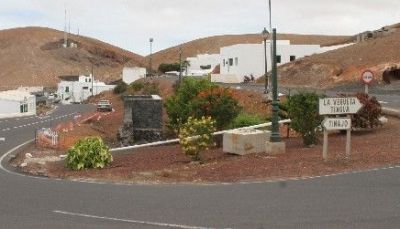
Among them, it especially highlights the problems of municipalities such as Tinajo and Teguise. In the first, almost 85 percent of the population does not have access to the sewerage service, while in Teguise the percentage is 66.3 percent.
In addition, the report emphasizes that "around 11,800 homes, mostly concentrated in Teguise and Tías, depend on autonomous sanitation systems", such as "cesspools, septic tanks or similar systems." To this is added the situation of La Graciosa, which "does not have any treatment plant, directly discharging its wastewater into cesspools."
Wastewater discharges into the sea
Another of the problems that this report warns about is discharges into the sea. "According to data from the Government of the Canary Islands, there are around 80 discharge points from urban and tourist centers in which wastewater is discharged directly into the sea without treatment," states the technical document that accompanies the future Island Plan.
Regarding water supply infrastructures, the report indicates that there are currently more than 80 desalination plants on the island between public and private, which "present some management and energy and residual performance problems."
On the one hand, it points out that "all these types of facilities depend on petroleum derivatives for their operation, so the availability and prices of water are determined by those of that resource." On the other hand, it refers to water losses in the network. According to this report, these are estimated between 30 and 40 percent of production. In this regard, it adds that part of these losses originate in "defective and poorly maintained pipes", but it also indicates that half of these supposed losses, of water that is not billed, could actually go "into illegal connections to the supply network".
The report indicates that there are no "official figures regarding the total water consumption of the island or the volume of wastewater produced", but "given the previous circumstances mentioned, it is judged that the island's load capacity in relation to supply and sanitation infrastructures is exceeded."
Proposed solutions
To increase this capacity, the Island Plan of Management of Lanzarote establishes a series of proposals, which include the location of new groundwater reserves susceptible to capture; the restructuring of uses in areas that, due to the concentration of wells, present an abrupt alteration of the water table that shows overexploitation; the location and construction of new regulating tanks; and the layout of new pipes from the new capture and regulation infrastructures.
In addition, it also bets on the improvement and modernization of distribution networks that avoid water losses; the realization of a census of extractions, salinity characteristics of the extracted water and total volume thereof; the construction of common underground tanks in industrial estates and new public squares "for the use of collected water in the maintenance of green areas and the construction, development and management of the irrigation network for agriculture, which will be based on capture through small desalination plants with autonomous energy supply and through renewable sources."
Finally, it also proposes the creation of new collectors and pumping and connection facilities with wastewater treatment plants; the expansion and improvement of existing stations, "with the implementation of tertiary treatments with continuous monitoring, in order to reuse the effluents for the preferred irrigation of green areas and urban spaces, as well as agriculture"; and "the expansion of the Caleta de Famara treatment plant to serve Island Homes".
Add La Voz de Lanzarote as a preferred Google source.
Stay informed with the latest current news.


