
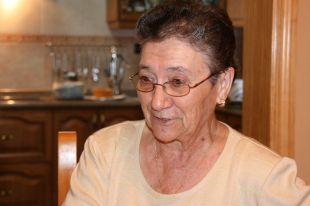
The flavors of traditional Canarian cuisine are maintained from generation to generation. From Hortensia Navarro's kitchen in San Bartolomé and Sensa Ventura's wood-fired oven in Teguise come desserts and dishes that during the Christmas season delight the senses of taste, smell and sight of their families who gather around the table to enjoy the food, chats and games they share.
The baifo or kid continues to be the dish they prepare for these dates, as in the past when they were "single". Both have their mother's recipe, but they have adapted it to the new times. Hortensia, who confesses to being a lover of cooking and points out that this is the place she likes most in the house, recalls that for Easter Day, December 25, this was the dish her mother prepared for them, but before cooking it, it was her father who made sure that the baifo in life was ready. "My father had goats and they had babies in November, he raised the baifos for a month with the goat, so that they would become mozos" explains Hortensia sitting at the table in her kitchen, while in the oven she has some cookies about to take out.
In Sensa's house, the day the kid was eaten was Christmas Eve, December 24. Her grandfather raised them and then they took them in clay baking dishes to the wood-fired oven of the bakery where her mother and aunt Juana worked. Fresh cheese or wrinkled potatoes were also part of the menu at Sensa's house that day. "We ate what there was, because those were very bad times" she says.
For dessert in both houses, of course, truchas could not be missing. They also made torrijas. The truchas "are the most essential thing for Christmas" determines Sensa. Her mother was the one who made them with her aunt in the bakery. From them she learned the recipe this woman known in La Villa for her famous truchas, but as she says she improved it when she worked for some ladies who lived in the Plaza to whom she made truchas every night for them to have dinner with their coffee with milk. Afterwards they became her way of earning a living and continue to be so, although she only works on weekends. She also remembers torrijas, sweet potato pudding and sponge cake on the Christmas table.
Hortensia, on the other hand, no longer makes flour truchas. However, when she lived with her parents she shared the task of making them with her sister; one stretched the dough and the other filled and closed them. They made them of sweet potato, pumpkin and chickpeas for Easter, New Year's and Epiphany. She remembers the chickpea ones as laborious, but very good. She also says that visitors at Christmas were attended by offering them these delicacies, anise and mistela, a liqueur that they made themselves, as in Sensa's house, who made coffee or orange liqueur. She recalls with melancholy "how beautiful the Easter ranchos were" to which when they passed singing carols making the rounds, they were given truchas and mistela. She knows the recipe for the liqueur by heart and without hesitating for a second she tells it, like all of them.
The lack of food
Although in Hortensia's house they kept the kid for Easter Day and in Sensa's for Christmas Eve, the other special days of the Christmas holidays both agree in pointing out that "they ate what there was". If there was leftover baifo, then baifo and if not, sancocho, potaje or broth. Of course, truchas were what was never missing.
"If my mother bought a nougat that was already a great thing" says Sensa. "The rich people did eat everything, but the rest what there was, and that's how I taught my children" explains Hortensia. Sensa also does so, who has her trick so that the kid does not spoil and can be used, she marinates it.
Now although they keep the kid recipe they inherited from their mothers, they have modified it to the tastes of their own. Therefore, in Hortensia's house, instead of cooking it stewed as they did before, they bake it for these dates, "because my daughter likes it more" says Hortensia. In addition, on the table there are also prawns, ham, etc., foods that they point out that when they were little "were not seen" in these lands. In the case of Sensa, as she never ate ham, she has not even wanted to try it, since as she explains she has never eaten it and does not miss it.
Hortensia and Sensa, two good cooks who this Christmas will put the kid on the table again and the truchas, although Hortensia no longer makes them, keeping the flavor of traditional Canarian cuisine and having cooked with much love, affection, patience and tranquility for their own.
Recipes
Hortensia's composed kid
Ingredients: Kid, onions, tomatoes, bay leaf, green and red peppers, almonds, wine, bread, potatoes, thyme, oil, black pepper, saffron, garlic
Preparation: We brown the kid and place it in a pot. In a frying pan, we brown two whole heads of garlic, two small whole tomatoes, two large onions cut into four pieces and a piece of red and green pepper.
When everything is well browned, we put it in the pot, along with the kid. Then we brown about seven slices of bread and put them on a plate, and then brown the peeled almonds. When they are browned we put them together with the bread and a head of peeled garlic raw, we chop everything in the chopper and then add it to the kid. Then, we add a glass of white wine, bay leaf, thyme, black pepper, saffron and cover it with water, we put it on the fire and we turn it so that it does not burn. When we see that it is already stewed, we add the browned potatoes, we give it a boil and let it rest, and then serve it to the table.
Sensa's sweet potato truchas
Ingredients: Flour, butter, water, salt, sweet potato, sugar, anise, chopped almonds, saffron and cinnamon
First the puff pastry of the truchas is made, which is a mixture of flour, butter, water and salt. It is kneaded with the hands until the dough has good consistency and does not stick to the hands. Pieces of dough are cut and then stretched with a rolling pin piece by piece. The sweet potato is parboiled, ground and sugar, anise, chopped almonds, a little saffron and cinnamon are added. The puff pastry is filled, cut into a half-moon shape, closed with a fork and fried. Then sugar is added.


