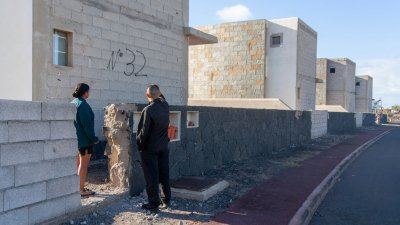
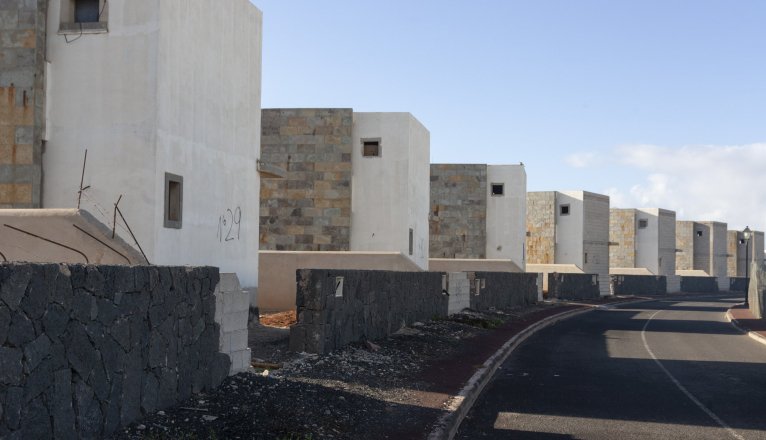
Through aerial images that the Canary Islands Government periodically captures of the islands' evolution, the unbridled development of Playa Blanca can be seen. The tourist town of Yaiza, in the south of Lanzarote, once housed the stretch of coast with the most illegal hotels in the country. Currently, most establishments have been able to regularize their situation, while other concrete skeletons have remained for decades in limbo: they have not been regularized, but their original state has not been restored either.
Added to the uncontrolled urban development is the current housing crisis that Lanzarote and the rest of the archipelago are immersed in. The lack of housing and the high rental costs are the main concern of residents on the island, above any other.
Given the continuous escalation of rental prices, which rose to an average of 1,155 euros in the islands of Lanzarote, Fuerteventura, and Gran Canaria, cases are increasing of people who are forced to resort to sleeping in motorhomes, sharing flats with several families, or staying in urbanistic skeletons.
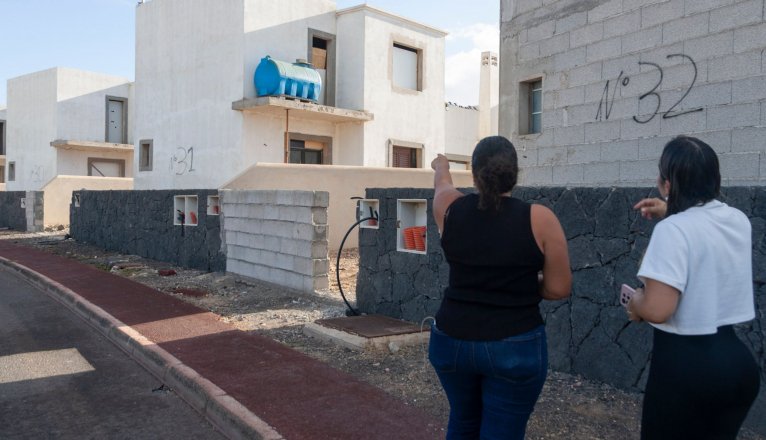
This last case involves the twelve families living in the concrete skeletons of Villas Camelot, between Laurel and Malvasía streets in Playa Blanca (Yaiza), a concrete skeleton that was halted for violating urban planning laws. Some of these residents have spoken with La Voz to denounce the lack of housing alternatives on the island and the problems they face in being able to leave these properties.
"We have nowhere to go"
"All the houses they used to rent to us are now vacation rentals," says Antonia (a pseudonym). "You used to find rentals here, but now there's nothing, and what is available is extremely expensive. How are we supposed to pay for a house that costs 1,700 euros?" she continues.Meanwhile, it points out that rooms, without access to the kitchen, only for sleeping, are 600 euros. Along these lines, Drago Canarias reported in the summer that rooms in Lanzarote were already around 500 euros.
Antonia and her husband were among the first three families to settle in these concrete skeletons. Her husband and she moved into one of them a year and a half ago, and they assure that it was with the property owner's approval, in exchange for taking care of the rest of the buildings. Both work cleaning villas or doing any job: "Whatever comes up."
"We didn't know where to go, we couldn't afford rent," Antonia begins during a conversation with La Voz. "We don't even have anywhere to go," she adds. This Yaiza resident is one of the 2,300 people registered as applicants for social housing in Lanzarote and insists that although she has tried to find a rental through real estate agencies and has even considered taking out a loan to buy a home, the situation "is impossible."
Since they arrived at these properties, Antonia explains that they tried to comply with the agreement with the owner and even kicked out people who were sleeping in these homes. "Seeing that people have nowhere to go, you feel sorry for them too. Many families have children and you say 'my God,' you put yourself in that person's shoes," explains this neighbor, who ended up allowing other people to settle in the area.
"We know that this doesn't belong to us, that above all it belongs to its owner, but these are houses that are not inhabited, abandoned," he defends.
Antonia has a light motor in her home, from which other neighbors would hook up to be able to turn on a light bulb in their homes and little else. However, she assures that those responsible for the eviction company Lanzaokupa, hired by the property owner, allegedly broke the cables that connected to other homes.
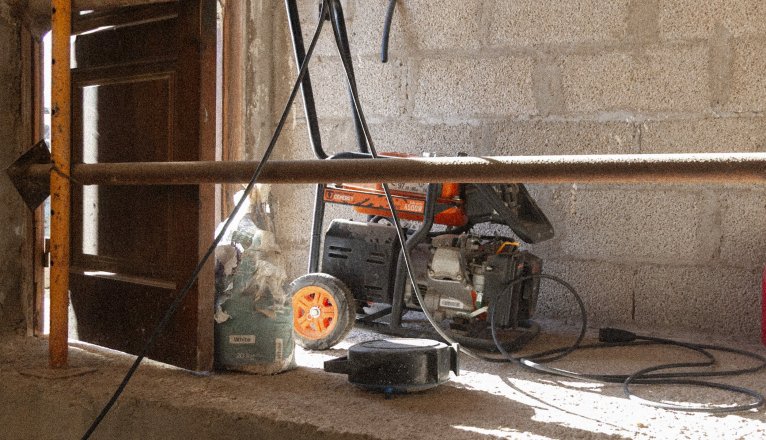
Estela and Jaime (fictitious names to protect their identity) live in one of these unfinished homes. He works as a cook in one of the tourist town's hotels, while she cleans tourist villas when the opportunity arises. Both, Colombian nationals, arrived on the island three years ago and claim they ended up in these homes due to the difficulties in affording the high rental costs on the island.
First they stayed in a friend's home and then decided to settle in one of these unfinished buildings. They also moved to the area with other relatives, who live in another of the concrete skeletons.
"I'm not here to cheat the system; I'm looking for a place to live, I'll pay for it, and then I'll leave," he states in a conversation with La Voz. This couple points out that with their hospitality salaries, in his case around 1,400 euros per month, they cannot afford a rent of 1,700 euros plus expenses. "It's illogical that it's not even enough for rent," he adds.This resident denounces the methods of this eviction company, which has accumulated dozens of complaints with the Civil Guard and the Court. "The methods are another matter. They are mistreating us and kicking us out." In this regard, they point out that "the day the judge, when the order comes out, I'll hand over the house and leave"Finally, Pedro (a pseudonym), another resident living among the skeletons, states that he ended up living in this area after his divorce. He currently works split shifts in the kitchen of a restaurant on the island. In his case, he assures that he is "terrified" by the methods of the eviction company. "Where is it written that because you take some houses that are skeletons, you have to do a bunch of things to someone?" he questions.Pedro points out that the owner of the properties "left some houses unbuilt, without services, without anything. At the moment there is no housing; if perhaps the same thing happened to them, they would think differently."
Add La Voz de Lanzarote as a preferred Google source.
Stay informed with the latest current news.