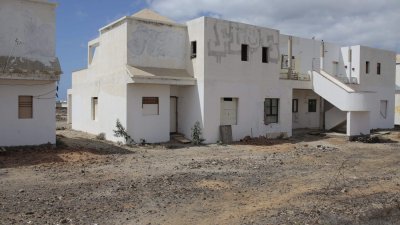
A Court in Arrecife has ordered the identification of the tenants of the occupied skeletons of Costa Teguise. According to the Press Office of the TSJC, the case is currently "in the placement phase" so there is no scheduled date for the eviction, but there is an open process against the occupants.
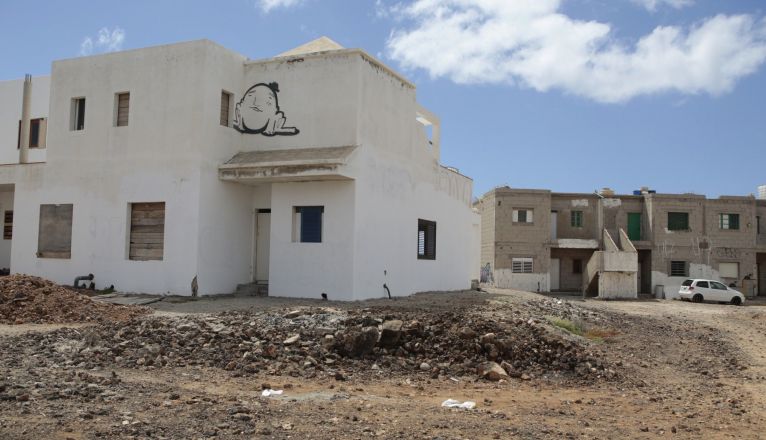
Plot 214, on which the skeletons of unfinished concrete stand, which have been rehabilitated and adapted by different families to live in them, is located at the entrance to the coastal town. The unfinished construction of the 90s, projected the construction of 157 apartments and was stopped by court order. Now it serves as a housing response for those who cannot access conventional rentals, in an increasingly tense market.
María (fictitious name) and her husband lived in a rented house in Lanzarote when the pandemic arrived. He worked in the hospitality industry and she at that time did it at home, in charge of her two young children. After their landlady asked them for a rent increase, from 400 to 600 euros, the family had to leave the house and occupy an empty house, owned by a bank, in Teguise. When this property was bought, the four of them and their pets faced the first eviction of their lives. Now they face suffering a second launch in less than a year.
"They gave us a few days to collect our things and then we left that same week. We paid 2,000 euros to move into a house in Costa Teguise," he told La Voz. María, her husband and her children are one of the 88 families, according to data offered by the Social Welfare of the council after the last survey, who currently reside in the abandoned and occupied houses of Avenida de Las Palmeras in Costa Teguise.
Many migrants live in the area, especially from Colombia, who have not regularized their administrative situation and work in the care of the elderly and in jobs in the hospitality industry on the island.
The fear of an imminent eviction in the area has led several families to pay for the legal assistance of a lawyer, to delay the launch as much as possible. María, however, prefers not to fight to stay longer in a property that does not belong to her, although when she is expelled she will have to look for room rentals and separate her two children and each one go with a parent.
Faced with rumors of disoccupation, she assures that some of her neighbors are selling the properties again for 3,000 euros. "If they kick us out, we'll leave, we're not going to sell anything to anyone, we'll leave the house closed and let whoever wants to use it," she emphasizes.
They found the property without baseboards or windows when they started living in it, but they adapted it over the months. Like them, dozens of families found a housing alternative in these concrete skeletons, in a context of housing access crisis in Lanzarote.
Both knew since then that they would not be in the place for too long, but they took the time to pay for the cost of the occupied house in monthly installments and to save enough money to pay for the entrance of a rental. So far, they have not found an alternative. "To rent they ask us if we have minors in our care and if we have pets and we are not going to leave my children or my animals behind," she laments.
Families with minors
"When the social worker arrived and saw all the children there, she threw her hands to her head," this neighbor recalled. As a result of the rumors indicating the presence of minors in the place, the Social Work Unit of Costa Teguise appeared in the abandoned complex and interviewed "all the families who allowed it to do so", according to sources from the Unit to La Voz. Since then, families have begun to be identified, although the exact data is difficult to measure, because "new families continue to settle in".
Among the debates that the City Council has faced are the problems in the registration, since the council stopped registering residents for some years.
In addition, according to what they reveal from the Social Work Unit of Costa Teguise, the majority of residents have decided not to voluntarily go to Social Services, probably "moved by fears". That is why one of the objectives of the visits of this area has been to demystify and dismantle lies, among them, a very widespread one, in which the occupants are made to believe that the City Council will let them stay in the houses for two years.
Meanwhile, the Councilor for Urban Planning of Teguise, Rita Hernández (PP), has told this editorial staff that the City Council is contributing to identifying families. "The procedure is alive, we have been providing the documentation that they have asked us for, so that it continues forward and reaches the end it has to reach," she added.
An unfinished project by Lanzagal Promotores
Last November 2022, the then Councilor for Urban Planning of the City Council of Teguise and current mayor of the municipality, Olivia Duque, announced the contracting of the project to demolish plot 214 of the coastal town, after justice threatened with fines "against the personal assets" of the then mayor, Oswaldo Betancort for not complying with the court ruling of 2005.
To this day the skeletons have not yet been demolished. Already then the PSOE denounced that during the presidency of Pedro San Ginés in the Cabildo of Lanzarote the fulfillment of the sentence was not demanded either.
This building was left half-built after a court ruling annulled the building permit in the early 2000s. Despite this, the owner Lanzagal Promotores refused to pay for the demolition of the buildings and have been waiting almost two decades to be demolished, according to the Teguise council.


Add La Voz de Lanzarote as a preferred Google source.
Stay informed with the latest current news.