
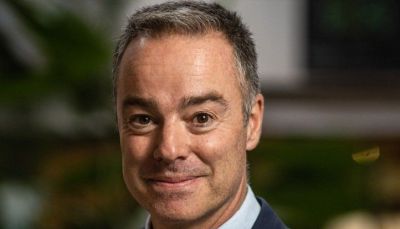
The manager of the Lanzarote Health Services, Pablo Eguía, spoke this Wednesday on the radio program Radio Lanzarote - Onda Cero to talk about the state of healthcare on the island, following criticism against the Psychiatric Emergency Service of the Molina Orosa Hospital.
Eguía has assured that the Molina Orosa has "a psychiatrist on call at the hospital 24 hours a day, seven days a week." According to the manager himself, "during working hours he is present" at the hospital, while "in the afternoons and weekends he is located." Currently, according to Health data, five psychiatrists work at the Lanzarote hospital, while in the Emergency Room there are nine specialists in Psychiatry who are on call.
"The difference between being located and being present is that the present one goes home the next day and the ten or fifteen mental health patients who would have to be seen the next day are not attended to. So, it is not a whim, it is simply that the response from home can be in minutes if necessary. When the Emergency Room doctor requires a specialist, he appears at the hospital in minutes," he continued.
During his intervention in Buenos días, Lanzarote, Eguía indicated that both from the Heads of Psychiatry, Emergency, as well as the different involved Directorates, the Canary Health Service and the Ministry of Health are "all in agreement" that, "for the volume of care" that exists in psychiatric emergencies with urgent requirements of "two or three patients a day", "the best model is the one we have and there is no technical debate here."
Likewise, he urged the population to understand "how the hospital's Emergency Room works." "When emergency specialists consider that the situation is urgent and needs to be assessed by a specialist, then that consultation occurs. All health problems that go to the emergency service are not attended by the specialty," the manager insisted. Thus, he exemplified, "one goes with an asthma attack and is not always seen by the pulmonologist, one goes with a headache and is not always seen by the neurologist. Anxiety crises are frequent and do not always require the assessment of a specialist in Psychiatry," he continued.
The manager insisted that the Emergency Unit is to solve "urgent care", while the "preferential and normal care of the specialties occurs in their specific areas in the consultations."
He denies that psychiatric patients are tied up
The manager of Lanzarote's healthcare has denied that the most common response for psychiatric patients is sedation and mechanical restraint, as stated by the son of a patient in the last plenary session of the Cabildo of Lanzarote: "I have to defend our professionals because that is saying that bad practice is done and our professionals do not do bad practice. So, this is false." At the same time, he assured that "when these types of interventions occur" they are followed "under strict medical and ethical criteria."
Likewise, Eguía has indicated that while "professionalizing health management" is requested, we also "ask to do whatever a person wants, that is not the case", in relation to the criticisms of some patients with the Emergency service. The health official has defended that we must "listen to our Heads of Psychiatry who have the specialty of Psychiatry, who have been attending patients for ten, fifteen years, who are the ones who carry the weight of all mental health and who know what is best for patients."
Eight mental health devices
The manager of the Lanzarote Health Services has explained that in the Mental Health Areas of Lanzarote there are 80 people working in eight devices. Among them, the Inpatient Unit, the Valterra Unit, the Child-Juana de Tías Unit, the Assertive Community Treatment Team (ETAC), the Transgender People Support Unit (UAT) and the First Psychotic Episodes (PEP). "In relation to what we need or not, we have to listen to the professionals," he continued.
Eguía has explained that they have drawn up an Action Plan in which "the care team has been reinforced with four psychiatrists up to the current fourteen." Likewise, he has assured that "the main need that the island's mental health has at the infrastructure level is the Brief Inpatient Unit", which has capacity for 12 people.
In addition, he explained that the project to make a new building with a Day Hospital is already in the drafting phase. "Those are the real needs of mental health," he assured, "the rest, well, you will see what the rest is, but it is not the need we have at that moment."
The island has eight psychologists in Primary Care and five in specialized care. "We are trying to attract more clinical psychologists for specialized care," he advanced.
At the same time, he invited not to investigate the criticisms and emphasize the progress that has been made. "The management has more staff than ever, it has more specialist doctors than ever. We are reducing waiting times for interventions," he concluded.


