
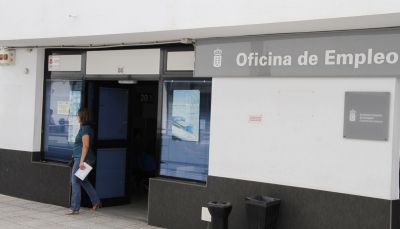
Registered unemployment in public employment service offices registered a decrease of 782,232 unemployed in 2021 (-20.1%), its largest annual drop in the entire comparable historical series, which began in 1996. Until now, the most pronounced drop in unemployment was in 2016, when 390,534 fewer unemployed were recorded.
The total volume of unemployed people reached 3,105,905 at the end of the year. This is the lowest figure at the end of a year since 2007 and represents 140,142 fewer unemployed than in February 2020, when the pandemic began, as reported this Tuesday by the Ministry of Labor and Social Economy.
The recovery of activity after the gradual disappearance of restrictions against Covid, means the return to the fall in unemployment after in 2020, the first year of the pandemic, an increase of 724,532 people was registered, the worst figure since 2009.
All these figures do not include workers who are suspended from employment or have reduced working hours as a result of an ERTE, since the definition of registered unemployment does not count them as unemployed.
Regarding employment data, Social Security affiliations have managed to exceed pre-pandemic levels. The data provided by the Ministry of Inclusion, Social Security and Migration this Tuesday register 19,824,911 affiliates at the end of the year, gaining 776,478 employed in 2021, which represents the largest growth since 2005.
Great evolution of the services sector
Unemployment decreased last year in all economic sectors, especially in services, which subtracted 532,670 unemployed in the year (-19.6%). This was followed by the group without previous employment, with 95,916 fewer unemployed (-27.3%), and construction, which registered a decrease of 60,209 unemployed (-18.9%).
For their part, industry and agriculture reduced their number of unemployed by 56,885 and 36,552 unemployed in 2021, with percentage drops compared to 2020 of 18% and 20%, respectively.
Unemployment fell in 2021 in both sexes, although, in absolute values, it did so to a greater extent among women. Thus, female unemployment decreased by 401,089 women compared to 2020 (-18%), compared to an annual decrease in male unemployment of 381,143 (-22.9%).
Thus, at the end of the year, the number of unemployed women stood at 1,824,032 and that of men at 1,281,873.
According to age, unemployment among young people under 25 years of age decreased by 38.7% in 2021, with 140,403 fewer unemployed than in 2020, to stand at 222,594 unemployed, the lowest figure in a month of December in the entire historical series, according to the Ministry.
For its part, unemployment among people over 25 years of age fell in 2021 by 641,829 (-18.2%), to a total of 2,883,311 unemployed.
Data by communities
Unemployment decreased in 2021 in all autonomous communities, especially in Andalusia (-183,796 unemployed), Catalonia (-128,453), Madrid (-66,809), Canary Islands (-66,618) and Valencian Community (-66,217).
In relative values, the largest decrease in unemployment was for the Balearic Islands (-33.6%, with 28,365 fewer unemployed), followed by Aragon (-25.86%, -21,300 unemployed) and Catalonia (-25.81%).
For their part, the smallest annual decreases in unemployment in absolute terms occurred in La Rioja, with 4,138 fewer unemployed than in 2020, and Cantabria, which subtracted 5,815 new unemployed in the year.
According to Labor data, registered unemployment among foreigners decreased in 2021 by 168,978 unemployed (+29.9%) compared to 2020, bringing the total number of immigrants in unemployment to 396,402, which represents 14,204 fewer unemployed than in November (-3.4%).


