
The Council of Ministers has approved two royal decrees by which 302 million will be granted to the Canary Islands to finance actions that promote its energy transition and another 50 million to improve the competitiveness of its tourism industry.
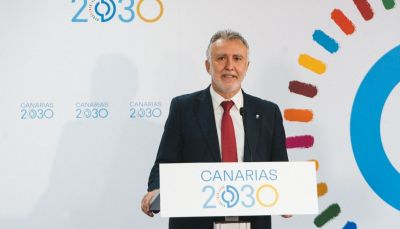
This was announced by the Government Delegate of Spain in the Canary Islands, Anselmo Pestana, and the President of the Regional Executive, Ángel Víctor Torres, in a joint public appearance last Tuesday in which they valued the effort made by the central government to help this archipelago develop strategies that contribute to reactivating and modernizing its productive fabric.
The 302 million in aid that, at the proposal of the Ministry for Ecological Transition, is allocated to the Canary Islands will "mobilize a total investment in the Islands of more than 479 million euros in areas such as self-consumption, energy communities, innovative renewables, storage and electric mobility", Pestana highlighted.
With the implementation of decarbonization strategies for the Spanish archipelagos, presented months ago in both regions by Minister Teresa Ribera, self-consumption is expected to multiply by ten in the Canary Islands and the charging infrastructure will have 1,150 new public points, which "will mean quadrupling the current figure", Torres stressed, who thanked the "clear commitment that the Government is making to the green transformation" of the Islands.
The Canarian president recalled that the actions planned for the decarbonization of the islands have a budget of 700 million euros, of which almost 500 will be managed by the island governments, while the remaining 200 will remain in the hands of the Ministry.
These investments will serve to electrify maritime routes between islands and will also promote that the renewable power installed in the Spanish archipelagos is "more than doubled, so that they exceed a third of renewable contribution to their electricity mix", said the Government Delegate.
The tourism sector takes 50 million to improve its competitiveness
In terms of tourism, the 50 million in aid granted to the Canary Islands, from the Next Generation EU funds, will serve to finance actions that allow this autonomous community to "adapt its economy, highly touristy, to drops in demand", such as the one that followed the spread of Covid, "impacts on tour operators" or other adversities.
Thus, in the Canary Islands, actions to requalify obsolete tourist infrastructure, investments in public infrastructure, especially those that affect the improvement of the attractiveness of public spaces, the promotion of sustainable mobility or the environmental management of beaches and their enhancement with equipment may benefit from these subsidies.
"The reinforcement of public services (administration, security and health) in areas of special tourist influx, tourist training aimed at young people, the development of alternative products to sun and beach and the deseasonalized promotion of the destination may also be financed with these funds, which will also serve to incentivize transport companies that facilitate connectivity with the peninsula", according to the note from the Presidency of the Government.
The President of the Canarian Government, Ángel Víctor Torres, has also celebrated the 3 million euros approved this Tuesday by the Central Executive for the conservation of the archipelago's biodiversity.


