
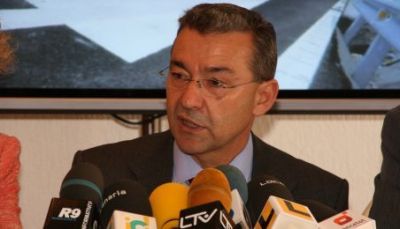
The Government of the Canary Islands approved this Saturday a package of measures to face the cuts imposed by the General State Budgets. These include changes in tax regulations for an estimated increase in revenue of 250 million euros and other provisions to adjust expenses, with the aim of reducing the impact on the provision of essential public services: health, education and social services. The Governing Council has integrated most of these measures into the draft Law on Administrative Measures and Modification of Tax Regulations, for which it requests an urgent report from the Economic and Social Council.
In the area of income, the Government of the Canary Islands agreed to the creation of new taxes and fees, the elimination and reduction of some tax breaks, and the increase in taxes on fuel and the IGIC.
With these measures, the Executive plans to collect around 250 million euros in the next six months, an insufficient amount to face the "serious and unfair cuts of the State amounting to 800 million, so we must make other serious adjustments", according to Javier González Ortiz, Minister of Economy, Finance and Security.
González Ortiz pointed out that the Government of the Canary Islands "is forced to apply extreme measures because the situation in which the State has left us is also extreme" and justified the decisions taken to protect, as an absolute priority, health, education and social services.
The Governing Council decided to create two new tax figures. The tax on deposits to financial entities that will be paid by banks and savings banks is established and the tax on large surfaces is established.
On a temporary basis, the IGIC will increase the general rate from the current 5% to 7%, raise the rate established with 2% to 3%, maintain the rate at zero for essential items, and increase the current rates of 9% and 13% by 0.5%.
Regarding this tax, some tax breaks are eliminated, including the one established for fixed and mobile telephony, which will go from being exempt to being taxed at the general rate.
In addition, the tax on fuel is increased, a tax that, unlike the State, has not been updated in the Canary Islands since 2004, leaving the one applied to professional diesel unchanged.
Regarding the Personal Income Tax (IRPF), the Government agreed to increase the high zone of the autonomous section so that for incomes above 53,000 euros per year, the rate goes from 21.5% to 22.58%.
The current bonus on inheritance and donation tax is also eliminated, in addition to some of the deductions in the IRPF depending on the income of each citizen. This is the case of expenses for studies, for transfer of residence, for birth or adoption, for those over 65 years of age and dependents, for large families or for daycare expenses.
Spending policies
In addition to the tax modifications, the draft law addresses changes in the structure of the autonomous community with the suppression of two agencies (with the rank of general directorate) and the concentration of the three public bodies dedicated to the training of public employees in one (Canarian Institute of Public Administration, Canarian Security Agency and School of Health and Social Services of the Canary Islands). This implies the elimination of 4 management centers, with the rank of general directorate of the structure of the Autonomous Community. In addition, nine consultation and management bodies, created by different legal norms, are extinguished, all in order to apply more efficient mechanisms in public management.
The Personnel expenses chapter represents 37.8% of the 2012 budget, so, inevitably, given the proportion of the adjustment that is necessary to adapt the autonomous accounts to the budgetary framework defined by the Government of Spain, the Canarian Executive foresees a series of modifications in the working conditions of public employees.
In a generic way, it applies a cut in their annual remuneration of 5% to almost 62,000 public employees. With this salary reduction, the Autonomous Community saves 130 million euros.
The Government, in the draft law, echoes what was expressed by councils and town halls for the transfer of this same cut to public employees of all local administrations (Councils and Town Halls). Similarly, it foresees the application of this reduction to teachers of the Canarian universities and to teachers of subsidized education. These reductions will not be applied to personnel who earn less than 13,469.4 euros per year, an amount that is equivalent to 1.5 times the Minimum Interprofessional Salary.
Other matters such as the conditions for the extension of working life by public employees (labor and civil servants); the amount of the specific singular supplement of the autonomous police and computer personnel or the extinction of 13% of the positions of temporary personnel (14 positions), are also subject to regulation in this text.
Public Companies and Foundations
The norm also introduces the establishment of caps for the remuneration of personnel in public companies and foundations, in order to give legal status and permanent character to such limitations.
Another of the measures that directly affects public companies is linked to Radiotelevisión Canaria, for which a 20% reduction in the expense of external contracts and the closure of the second channel of Public Television is foreseen.
With all this package of measures, the Canarian Government intends to guarantee the best public services in the Health, Education and Social Services services after the drastic cuts imposed by the Government of Spain on the Autonomous Community of the Canary Islands.
Add La Voz de Lanzarote as a preferred Google source.
Stay informed with the latest current news.


