
He was the first known European navigator to have contacted Lanzarote. Chronicles say that the Genoese Lancelotto Malocello stepped on the island in 1312 and ordered the construction of a settlement in the form of a tower or castle before the goodness of the Fortunate Islands reached the ears of the Normans.
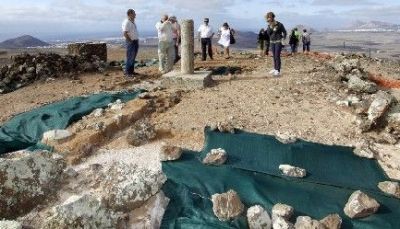
Now, an archaeological mission is working between the Caldera de Guanapay and the Meseta de la Torre, in Teguise, in search of the possible location and the probable vestiges of that defensive fortification. Not in vain, next year marks 700 years since the arrival of Lancelloto. The Cabildo of Lanzarote and the Government of the Canary Islands finance works of the highest interest.
In addition to searching for the defensive and protective construction of the Genoese navigator who arrived in Lanzarote and lived among the Majos before the Franco-Norman conquest of the island, the mission analyzes the fragments of materials that are still preserved in the site, such as mortar and others, and conducts a study of the Caldera de Guanapay with the survey of the situation of each of the archaeological sites.
So far, explains the Councilor for Historical Heritage of the Cabildo de Lanzarote, Juan Antonio de la Hoz, "this excavation has concluded the phase of systematic surface prospecting, as well as that relating to archaeological soundings." At the moment, details de la Hoz, "the Cabildo is waiting to receive the report drafted by the work team of the company Tibicena, to analyze the continuity of the studies, until knowing in detail the nature and function of the area that was exhumed".
As a result of this prospecting, the councilor points out that "several materials have appeared, still under study, and a structure of wide walls whose function is difficult to specify at present, since there is no correspondence with the information obtained from the existing documentary and historical sources".
Possible guided tours
As a result of this campaign of archaeological soundings that has been carried out in the area of the Meseta de la Torre and on the edge of the Caldera de Guanapay, the Historical Heritage area raises the need for the works to continue "with the possibility of conducting guided tours to the site while the archaeological excavation is being carried out, as well as giving talks in the municipality to publicize the work being carried out there", comments de la Hoz.
These guided tours and talks would be organized by the Historical Heritage Service of the Cabildo as a contribution to the commemorative events that are currently being prepared on the occasion of the seventh Centenary.
ACN Press
Add La Voz de Lanzarote as a preferred Google source.
Stay informed with the latest current news.


