
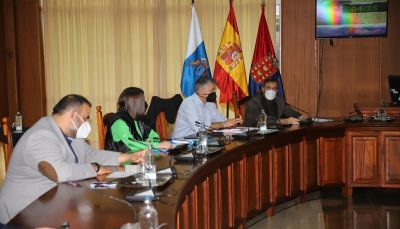
The Nationalist Group (CC-PNC) in the Cabildo of Lanzarote will present a motion to prevent the "imminent closure" of livestock, agricultural and fishing farms, because it assures that many of them are losing "thousands of euros every month."
In addition, the nationalists will request "that direct aid be granted to the entire primary sector, including fishing vessels, in the face of the lack of liquidity and the increase in the cost of supplies (fodder and feed) and fuel." Likewise, the party takes into account that while inflation in the State is around 10%, "in the case of fodder and feed, it has reached unbearable percentages for the sector, not to mention the rise in fuel prices."
For all these reasons, the nationalists will ask the island government "to take good note of what other similar institutions such as the Cabildo of Fuerteventura are doing", since they assure that last March "it approved the direct concession of six million euros to reinforce the primary sector." "Of this amount, a total of four million were directed exclusively to the livestock sector to alleviate the extra cost of animal feed, and the other two million were allocated to maintaining employment in the agricultural and fishing sector (aid ranging, in the case of agriculture, between 10,000 and 40,000 euros, and in the fishing sector, between 10,000 and 35,000 euros)", they point out from Coalición Canaria.
“We already know that it takes work to develop bases that regulate them and process aid based on the number of livestock, lengths, number of employees, crew, etc., but we will not be able to do it while standing idly by, and there are resources to do so”, says the deputy spokesperson for the nationalists, Pedro San Ginés.
"Enough of posturing, marketing, unfulfilled promises, millionaire budgets from the Autonomous Community and the Cabildo itself that are not executed, indebtedness with credits for housing and reactivation of the economy, which are not invested," says San Ginés, and adds that "Lanzarote cannot simply wait for the Government of the Canary Islands, waiting in turn for Europe, to inject aid into the primary sector, because there are things that are in our power to do and there are resources to do so.”
Likewise, San Ginés recalls that the associations of livestock farmers in the Canary Islands "have denounced the breach of the Food Chain Law that prohibits buying at prices below production costs and that, after the Government's meetings with the dairy industries and food chains, which generated many expectations, it turns out that they only raised the aid by two cents per liter of milk (from 48 cents to 50), a totally insufficient increase".
“And while the Canary Islands continues to wait for Brussels to inject more POSEI funds into livestock farming, there are councils that have gotten to work from the first moment”, emphasizes San Ginés, who insists that “although Lanzarote already missed the legal framework of the Covid crisis to grant these aids, there are still instruments to be able to do so, but for this political will is needed, a desire to get to work and a councilor dedicated exclusively to the primary sector”.


