
Image: Sergio Betancort
With the reading of the proclamation by Mr. Ramón Díaz Perera, retired postman, the festivities in honor of Our Lady of Candelaria and San Blás 2013 began. The act was carried out for the first time in the church of Candelaria, in the so-called upper place, in the southern town of Tías.
The town crier began his story recalling what the festivals of his childhood and youth were like, which, he said, "have nothing to do with those of today, since in those times, apart from mass and procession, the most lively thing in the houses was the slaughter of the pig, a very good sign that fresh meat was going to be eaten for the party and the rest was stored in a barrel covered in salt, since freezers were not known at that time."
Ramón Díaz highlighted that "the dances could not coincide with the day of the Virgin and had to be celebrated eight days before or eight days after", he added that "in the 40s and 50s the town hall was installed in a rented house and the corporation was made up of the mayor, the secretary and an assistant, as well as a municipal guard."
In his speech he had a very special memory for D. José Quintero, the priest in charge of bringing a portable film machine to the town of Tías, "a novelty among the neighbors, he was also in charge of asking D. José Calero Mesa for a large block of land to build the new church of San Antonio." He continued his story recalling "how in the 60s and 70s the plots of land at that time had very little value and the owners gave them to those neighbors who did not have any so that they could build their house."
When Ramón Díaz Perera started working as a postman he only had one hour of service and 12 kilometers of route and when he retired in 2007 he already had 3 permanent labor postmen and he with the position of official. In total he dedicated 36 years of his life to this profession.
The proclamation was very lively due to all the experiences and anecdotes which on more than one occasion brought a laugh from the audience. Among those who accompanied the town crier were the mayor of the municipality José Francisco Hernández, the councilor of festivities Francisco Aparicio as well as some of the councilors of the government and opposition group, in addition to the senator for Lanzarote Óscar Luzardo and the vice president of the council Joaquín Caraballo.
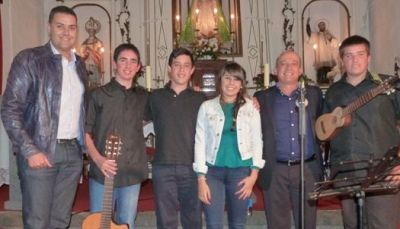
The act ended with the performance of a group formed by four young people from the town, who were performing in public for the first time and who knew how to win over the audience with their varied repertoire, to which the young Guaci gave voice, surrounded by Rayco's guitar, Marcos' timple and Alberto's drums.


