
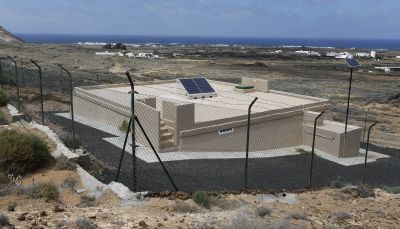
Water desalination continues to be the most used method to obtain drinking water in the Canary Islands. In 2020 it already reached 94% of the total, after having grown by 20.76% compared to 2018. This is reflected in the Report on the environmental situation of the Canary Islands, 2022, prepared by the Climate Change and Environmental Information Service and Gesplan.
Specifically, Lanzarote is the second Canary Island that produces the most desalinated water, only behind Gran Canaria. The island of volcanoes obtains an average of 133,148 cubic meters of desalinated water per day.
While it is one of the last in production of water extracted from the galleries, well below islands where it rains more such as Tenerife, Gran Canaria or La Palma.
The extraction of underground water represents only 6% of the 156,629 thousand cubic meters that were obtained only in 2020 in the Canary Islands.
The investigation reveals an increase in water consumption in the Canary Islands, linked to demographic growth, but also to economic trends, mainly tourism, and the development of water infrastructures.
In this line, "the geographical limitations of the Canary Islands, as well as the irregular rainfall in the region, make the cost of water in the Canary Islands higher than the Spanish average," summarizes the aforementioned report. While natural resources, which are less expensive, are also very limited.
Water consumption by sectors
The year of the pandemic, in which tourist arrivals were drastically reduced to reach zero tourism, meant that water was distributed 72% among households, 21% among economic sectors and 7% in municipal consumption.
While 73% of these essential resources are lost before reaching the consumer, being a "slight" increase compared to previous periods.
In this line, in 2020, 318,386 cubic meters of daily wastewater were registered, which in its vast majority (75%) end up directly in the sea, being an increasingly frequent trend between the analyzed period (2018-2020). Only 24% of the wastewater is used for reuse, representing an increase of 22.48% compared to the analyzed period.
Meanwhile, 47% of the 22,245 tons of sludge from wastewater treatment ended up in landfills, while 53% were used for incineration or energy use. "It represents a decrease in other uses such as methanization," the report says.
Agriculture is the one that makes the greatest use of reused wastewater in the Archipelago. Specifically, 66% of the 75,336 cubic meters are destined for this sector. Secondly, 33% are dedicated to gardens and recreational sports areas.
The project highlights to conclude the importance of improving information related to water so that statistics can be less limited.


