
A woman wakes up after having had a strange dream and goes to the parish priest of Yaiza to tell him: a mouth of fire opened in the mountain and the earth burned. Only a few hours later, the volcano erupts and the islanders desperately seek an escape that is denied to them.
This is the beginning of the story told in Tierra Quemada, a novel written by Nieves Rodríguez Rivera and published by the Lanzarote publishing house Ediciones Remotas. The book is already in bookstores and on Friday, September 8, at 7:30 p.m., a round table will be held about it at the El Almacén Island Cultural Center, with the presence of the author, who will be accompanied by the writer José Ramón Betancort, the historian José de León Hernández and the editor Mario Ferrer.
Lanzarote is known as the "island of volcanoes" due to the powerful presence of lava in the landscape, but little is known about the stories of the humble islanders who suffered the six years of eruptions of the 18th century. It was one of the strongest eruptive processes of the last centuries in this area of the planet, when almost thirty volcanoes affected 25 percent of the island's surface and buried more than twenty villages, giving rise to the Timanfaya National Park. This novel tells the recreated story of what could have happened in those first days of the eruption. The silenced story of the voices that never spoke and that now do so through this novel.
The archaeologist José de León Hernández, author of the book "Lanzarote under the volcano. The villages and heritage buried by the eruptions of the 18th century" and a great specialist in the historical research of Timanfaya, writes the following in the epilogue of this book: "Nieves, with this great novel, has been able to travel to those moments, to the feelings, the pains, passions and anxieties of those poor people, our ancestors, who were able to make an island reborn from its ashes, and now Nieves from oblivion."
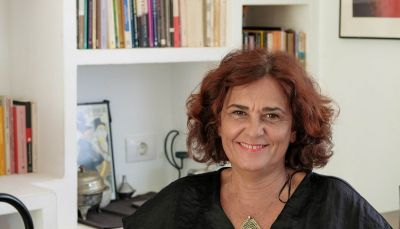
Nieves Rodríguez Rivera is a writer from Lanzarote, as well as a philologist and secondary school teacher in Gran Canaria. She has been the winner of the ENMA poetry contest (Espacio Mujer Madrid) of the José María de Llanos Foundation in 2019, as well as a finalist for the Alfeizar Novel Prize of 2019 with her book "Piel de cebolla".
Rodríguez has written film scripts and opinion articles for various media outlets in the Canary Islands. She has recently participated in the "Isolated Letters" project and in the literary conferences organized by the Cabildo de Lanzarote for the centenary of Mararía.
Her writing is characterized by delving, through an accurate and honest look, into stories that speak of the emotions and experiences lived by characters who try to understand or explain themselves, beyond feelings such as uprooting, contradictions, unease, uncertainty or wandering through life, using for this a clean, hard prose, but not without poetry and stylistic audacity.
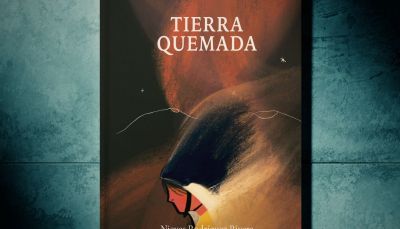
Another special collaboration for this book is that of the illustrator and writer Lana Corujo (Lanzarote, 1995), who in this case is the author of the cover illustration. As an artist she has exhibited at Madrid Design Week or at the Museum of Contemporary Art of Lanzarote, while as a writer Corujo has recently published the poetry collections Ropavieja (2021) and nueve dos año (2022).
The book, which can already be purchased in bookstores in the Canary Islands for 16 euros, is the fourth volume in the current literature collection of the publishing house Ediciones Remotas, after "El año de las cucas volonas" by José Ramón Betancort, "El crimen de las hermanas Cruz", by Concha de Ganzo and "Yo quiero ser sorda", by Elsa López, Canary Islands Literature Prize 2022. The book has had the support of the Yaiza City Council.


