
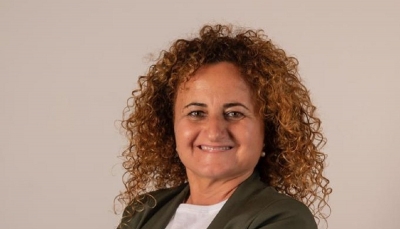
The secretary of the Regulatory Council of the Designation of Origin Wines of Lanzarote, Nereida Pérez, in an interview on the program Buenos Días, from Radio Lanzarote-Onda Cero, unravels the reasons behind one of the most abundant harvests of recent years and reflects on the prices that bottles are reaching in the island's restaurants.
Pérez also states that she is eagerly awaiting the Special Plan for La Geria that the Cabildo has announced and explains the deadlines of the electoral process in which the Council is immersed to renew or revalidate its directive.
- How has the harvest gone? Are the vines already completely empty or is there still some left?
Nothing, they are practically empty by 95%, there is some muscatel left, which they let ripen a little more on the vine. Maybe some diego, but we are at 95%, so now it's time for the little vines to rest.
- How much grape has been harvested?
We have harvested one million kilos more compared to last year. Last season we stayed at 1.9 million kilos and this year we are going to reach 3.2 million.
"The kilo has been paid at an average of 3.4 or 3.5 euros"
- Last year was a scarce harvest, what is the most common amount that is harvested in Lanzarote?
Our average harvest is two and a half million more or less. We have only exceeded three million kilos of grapes in four harvests in the history of the Regulatory Council. The largest was in 2018, which was close to 4 million kilos of grapes. I don't have the data with me but we could be talking about this harvest being the fourth most abundant harvest since the Regulatory Council collects data.
"The rain that fell in February and March was very good for the vineyard"
- Also, on this occasion, unlike the previous ones, there are more wineries, which can now process a large amount of grapes, isn't that so?
Yes, apart from the fact that there is one more winery registered in the Council, the wineries arrived practically empty to this last harvest. We had to establish quotas and there was a lack of wine on the shelves so there has been no problem in receiving more than 3 million kilos.
Now the interesting thing is that all the wineries are going to have enough wine, to go to the fairs or so that the shelves, which are so difficult to get, don't fall.
- What conditions have been given to exceed 3 million kilos?
The vineyard is a vecero crop, that is, cyclical, which means that more or less every three or four years it surprises you with these productions. It is also true that the rain that fell in February and March was very good for the vineyard. A very appropriate time to receive that irrigation. It was also colder, so the vine slept.
- Do you know if the Tourist Centers are going to buy back from the wineries above a price as was done in the last harvests?
We will have to talk about it. For the moment, what they have communicated to us is that they want to continue maintaining the positioning of Lanzarote wines in the Tourist Centers, which, together with fairs and events, are already an important support.
"At this price and with the Posei aid, which has been increasing every year, it pays to maintain the vineyard"
- What has been the average selling price of the grape?
There were wineries that paid all the varieties at 3.30 or 3.40 euros per kilo; others paid 3.50 for the volcanic Malvasia and the listán... and other varieties such as white listán at 3.20; so the average will be between 3.40 and 3 and a half euros.
- Very good price considering that in supermarkets you can find bottles of wine from other places for less than 2 euros. Lanzarote wine has to be expensive yes or yes...
I made that same reflection when I went to a supermarket shelf in the middle of the harvest and saw wine that could be bought cheaper than what a winery is paying for a kilo of grapes in Lanzarote.
If the kilo of grapes is between 3.40 and 3.50, plus all the production costs, we are at 6.5 or 7.5 euros per bottle. In addition to the risks involved for wineries to have that wine in deposit until the time comes to collect when the wine goes on the market. The winegrower also has risks because he cultivates his vineyard and wants to reach the end of the harvest with a splendid grape so that the winemaker can pay for it.
In the end, Lanzarote wine has the price it has because of the costs and because of our landscape. Let's not forget how difficult it is to cultivate a hectare of vineyard in Lanzarote.
"I must convey the concern that for there to be a primary sector, the issue of water must be solved"
- So much so that the whites of Lanzarote are the most expensive on the menus of the island's restaurants at 22 or 23 euros...
There we could do some work when all the promotion machinery starts with Saborea, maybe that's where we should make incentives. And the consumer is willing to pay 22 euros, but we have also seen the bottle at 28 or 29 euros in some places.
If the white wine leaves the winery at 12 or 14 euros, maybe it will be a reflection that we have to make together aloud. It is a matter of talking and seeing where we want to position our product and how far we want to go. The phrase


