
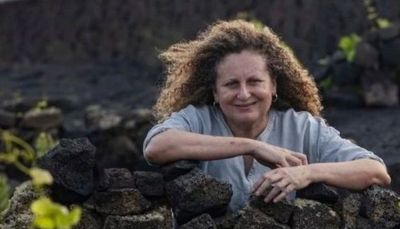
The Lanzarote winegrower Ascensión Robayna has been cultivating more than 20 hectares of traditional vineyards in La Geria for 17 years. A native of Mancha Blanca and an economist by training, she understands very well the importance of profitability for the countryside to be viable, but she places the landscape and cultural function that the vineyards, and the countryside in general, contribute to Lanzarote at the same level.
In an interview on the radio program Más de Uno Gourmet, from Radio Lanzarote, Robayna explains what has changed and what has not in the island's viticulture since her childhood, and frames the traditional cultivation of the vineyard among the keys to our hallmarks and our heritage.
- Is it true that winegrowers talk to the vines?
Talking is a very human thing. You can relate to the vines, not with full conversations, but by taking care of them and, above all, taking care of the land.
- When did you take over the family vineyards?
I've been doing it for 17 years, but it's really a lifetime. I am from Montaña Blanca, from a family of winegrowers, I am the fourth generation.
In the years when I was returning from university, I would go to harvest. In my house, life and time are counted by harvests.
- What was it like to participate in a harvest during childhood?
It was an absolute party. The hardness was in the land when it came to collecting the harvest, but when we returned to the wine press and the grapes were crushed, it had exciting and adventurous overtones for a little girl.
I remember that they constantly told me to get out of there, this is not a place for children. However, I was there because it was an absolutely exciting world.
"The countryside is no longer a refuge for those who cannot occupy another space in society, but it is a very valid option when being on this island"
- How did you decide to take over the family business?
I am an economist by training and I was away from the island for years. When we returned, we had the need to take care of the land and we recovered some abandoned vineyards.
- Thanks to the countryside, your family was able to send you to university...
Today it is constantly repeated that the countryside does not give, but the countryside has made it easier for many families to send their children to study and contribute to a better society.
The countryside is no longer a refuge for those who cannot occupy another space in society, but it is a very valid option when being on this island.
- But it's hard to work in viticulture...
Yes, it's hard, but like anything else that's worth it.
"The present is favorable to us, but the negotiating capacity of the winegrower today is similar to that of our ancestors"
- How has viticulture been transformed with the new generations?
Agricultural activity must have economic profitability, it must be maintained over time and it must sustain an economy, but also, from my point of view, it has other no less important functions such as environmental and cultural ones.
In our case, the cultivation of the vineyard in Lanzarote is a matter related to our hallmarks and our heritage that we must conserve, therefore it is not a minor issue.
Our ancestors probably did not give it the importance that we give it and they did it naturally, but the result was the same, they put some exquisite grapes in front.
- Has the negotiating capacity of winegrowers improved when selling grapes?
The present is favorable to us, because a series of factors have occurred that have improved their position in the market, but the negotiating capacity of the winegrower today is similar to that of our ancestors.
- What is the annual production?
We have more than 20 hectares, but the yields are very low, since they are historical vineyards with very old, almost century-old pineapple.
In this case, I would not talk so much about quantity, but about quality, due to the enclave in which the vines are located, the traditional system in holes and organic farming. It is an ecosystem, the balances of which we try to maintain.
- The Special Plan for La Geria project foresees a special identification for wines from cultivation in holes, which are much more difficult to produce...
Yes, it would be necessary to take a look at that wine that comes from those vineyards to identify them as such and that the consumer really sees where it comes from.


