
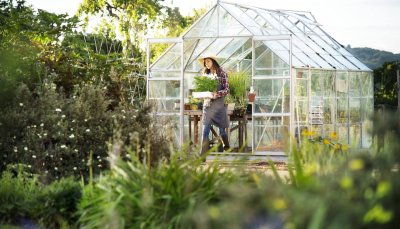
Lanzarote has a temperate, dry climate with many hours of sunshine annually, which allows for off-season cultivation if water, wind, and temperature are properly controlled with the right greenhouse
Lanzarote's Climate: Advantages and Restrictions
Lanzarote presents very stable average temperatures throughout the year, with summer highs around 25–29 degrees, and moderate winter lows around 14–17 degrees. This thermal variable does not present significant fluctuations, thus facilitating continuous cultivation cycles.
However, the island is characterized by its aridity, as annual rainfall is usually around 100–150 mm, concentrated in the months of November to March. Therefore, irrigation and water harvesting are key for a greenhouse to be productive.
In addition, Lanzarote is windy; the trade winds moderate temperatures but increase evapotranspiration, so wind protection is as important as irrigation control
Choosing the Right Greenhouse for the Island
Given the conditions in Lanzarote, it is advisable to opt for structures that adequately protect from the wind, control solar radiation, and allow for efficient water management. For example, models with rigid coverings (polycarbonate or glass) provide better thermal insulation, and windbreak mesh covers protect exposed areas
When looking for practical alternatives and standard measures, you can consult this site, where types and sizes suitable for domestic plots and small farms are compared
Materials and Guidance
The north-south orientation allows for effective use of solar exposure throughout the day. As for the structure, 6 to 10 mm polycarbonate provides an ideal combination of thermal insulation, light transmission, and wind resistance, a particularly important factor on the island of Lanzarote. It is also advisable to place a firm anchor in the ground and, where possible, incorporate natural barriers or external fences that act as windbreaks to reduce heat loss and the impact of the most intense gusts of wind.
Water management is key to cultivating year-round
The priority is water efficiency if rainfall is scarce. Therefore, it is advisable to install drip irrigation with adjustable emitters, as well as soil moisture meters. This can be supplemented with rainwater harvesting (cisterns), and if regulations and resources allow, through small-scale desalination systems or the collection of water generated by nocturnal condensation
Zonal and crop-specific irrigation control prevents overconsumption and promotes uniform yields. Meanwhile, timers and probes reduce waste and maintain adequate moisture for vegetables and aromatic plants
Practical Calendar: What to Grow and When
Given Lanzarote's mild climate, leafy greens (lettuce, chard, spinach), herbs (basil, parsley, cilantro), and solanaceous crops (tomato, pepper) perform very well in continuous cycles. In winter, leafy varieties and microgreens are more suitable; in summer, shade and ventilation control are crucial to prevent heat stress.Furthermore, cross-ventilation and movable shading allow for modulation of radiation in July and August, a period when maximum temperatures rise and radiation is more intense
Good Practices and Pest Control
A closed greenhouse reduces pests, although it favors the appearance of fungi if humidity is high. Adequate air circulation must be maintained, crops rotated, and biological control applied—predators such as lacewings or beneficial spiders are effective. Likewise, periodic cleaning is advisable, and waterlogging of substrates should be avoided
Ultimately, a well-designed greenhouse is the best way to take advantage of Lanzarote's mild and sunny climate for cultivation, as it allows for year-round harvesting if wind, water, and temperature are properly controlled.
Add La Voz de Lanzarote as a preferred Google source.
Stay informed with the latest current news.


