
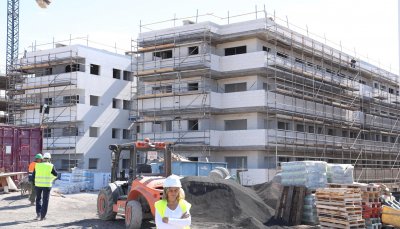
The Governing Council of the Canary Islands has approved this Monday a new decree that will regulate the Public Register of Applicants for Protected Housing in the Canary Islands and the allocation of public housing.
The rule introduces a structural reform in the public housing access system. The previous model based on a lottery is replaced by a regulated scoring procedure, supported by objective criteria linked to the economic, social, and family situation of the applicants.
With this change, the regional Executive has defended that "it strengthens the principles of equity, transparency, and legal certainty, guaranteeing that homes are assigned according to verifiable parameters and adjusted to the reality of each cohabitation unit".
Among the novelties of the new system, an important administrative simplification of the registration process in the Register of Applicants is also incorporated. From now on, the prior appointment and the in-person visit are replaced by a form that can be completed electronically, through a responsible declaration in which the applicant indicates that they meet the required conditions. This measure will streamline procedures, facilitate access to the register, and reduce processing times for citizens.
Requirements of residence and roots
The decree incorporates an increase in residency and roots requirements. In order to be awarded a publicly promoted protected dwelling, it will be necessary to be of legal age or an emancipated minor, to be registered in the Public Register of Applicants for Protected Housing of the Canary Islands and to prove residence in the Autonomous Community of, at least, twelve years uninterruptedly, or fifteen in case of discontinuous residence.
Likewise, uninterrupted residence or work performance will be required for a minimum of five years in the municipality where the development is located, prior to the publication of the award procedure. This requirement will not be applicable to victims of gender violence when the situation suffered has made their permanence in the municipality of habitual residence impossible, a circumstance that must be accredited in accordance with current state legislation.
In parallel, the decree consolidates and expands the reserve quotas for priority groups, reinforcing the social character of the public housing system. A minimum reserve of ten percent of the total housing units in each development is established for people with severe or total functional limitations in mobility or communication, distributed internally among those who require the permanent use of a wheelchair or other technical support devices and those who present accredited severe limitations without the need for such devices. In addition, a minimum reserve of twenty percent is set for young people up to thirty-five years old, ten percent for people sixty-five years or older, and eight percent for victims of gender violence, while the quota for returned emigrants may reach a maximum of one percent.
With this regulatory update, the Government of the Canary Islands defends "a more just, transparent, and oriented model for the effective protection of the right to housing, prioritizing those who demonstrate roots in the territory and greater social needs".


