
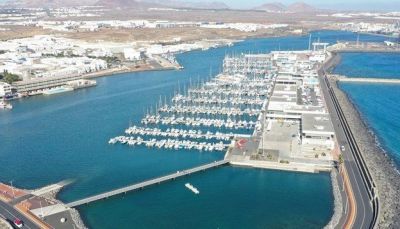
The Council of Ministers has agreed this Tuesday to expand the list of ports where fishing product landing and transshipment operations will be permitted, as well as the provision of port services for fishing vessels from third countries.
Specifically, the maritime facilities of Arrecife and Puerto del Rosario, in the Canary Islands; Burela and Celeiro, in Galicia, and Pasaia, in the Basque Country, are incorporated in this way.
The Department has explained that the list had not been modified for ten years, but the departure of the United Kingdom from the European Union made it necessary to increase the number of locations where its fishing vessels can receive port services.
The modification is carried out by replacing the corresponding annex of the agreement of the Council of Ministers of December 4, 2009, which set the places where the Ministry of Agriculture could carry out the control of fishery products from non-Community countries, as will be the case of the United Kingdom from January 1 next.
In the case of the Canary Islands, the Association of Ship Consignees and Stevedores of Las Palmas had already requested that the ports of Arrecife (Lanzarote) and Puerto del Rosario (Fuerteventura) be included in the annex.
Although none of the five newly designated ports currently has a border control point, fishing vessels from third countries are allowed access to the provision of port services, as well as the loading of fish; the landing and transshipment of fresh fishery products originating or coming from non-Community countries will also be authorized.
Agriculture has recalled that illegal, unreported and unregulated (IUU) fishing is one of the greatest threats to the sustainable exploitation of living aquatic resources and undermines the foundations of the Common Fisheries Policy (CFP) and international efforts to achieve better governance of the seas.
Therefore, the European Union, in accordance with its international commitments and given the magnitude and urgency of the problem, reinforced the fight against IUU fishing through the adoption of Council Regulation (EC) No 1005/2008 of 29 September 2008 establishing a Community system to prevent, deter and eliminate this activity.
Among the obligations established by regulation is the designation of ports in the national territory of each Member State in which fishing vessels from third countries are authorized to access port services and carry out landing or transshipment operations.


