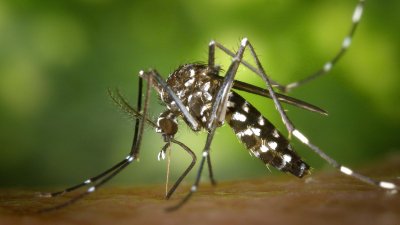
The Canary Islands Entomological Surveillance System has detected the presence of several adult mosquitoes in a trap installed at the cruise terminal of the port of Santa Cruz de Tenerife, one of which has been identified as a female Aedes aegypti, known as the dengue or yellow fever mosquito.
One-off entry via boats
Experts believe this detection is due to a one-time entry of this species through the arrival of ships from risk areas where the vector is established, although it remains necessary to continue entomological surveillance efforts to intercept the arrival of the vector at entry points in the Canary Islands and prevent its spread, the Ministry of Health reported this Wednesday.
Since 2013, the Canary Islands have been monitored for the detection of these types of mosquitoes through the installation of specific traps at strategic points, and the Canary Islands Entomological Surveillance System has managed to eradicate the presence of invasive mosquitoes in previous episodes in Fuerteventura, La Palma, and Tenerife.
Thus, the General Directorate of Public Health of the Canary Islands Health Service (SCS) recalls that following the latest detection of Aedes aegypti in the port of Santa Cruz de Tenerife, on February 21, 2024, and as established by the protocol within the Entomological Surveillance System, entomological surveillance efforts have continued, reinforced both in the number of traps installed and in the established sampling frequency
As a result of this monitoring work last week, the presence of adult mosquitoes was detected in one of the traps installed at the Cruise Terminal
The analysis carried out in the Medical Entomology Laboratory of the University Institute of Tropical Diseases and Public Health of the Canary Islands on the collected samples identified one of the captured specimens as a female Aedes aegypti.
Since the detection, the Directorate General of Public Health of the SCS, Maritime Health, Port Authority of Santa Cruz de Tenerife, and the competent administrations and bodies agreed to continue with entomological surveillance work in the detection area, as well as to take the necessary measures to prevent the establishment of these vectors in the archipelago.
Healthcare professionals in the care network were also informed about the risks to consider when attending to citizens and how to communicate data about the vector and its biteIn addition, specific training will be carried out for the early recognition of symptoms of associated vector-borne diseases.
Mosquito risk and breeding grounds in the neighborhood
The neighborhood's population has also been informed of the importance of reporting the presence of mosquitoes and breeding grounds in their homes and gardens, as well as any bites that may occur.
Health authorities indicate that in case of any suspicion, citizens can send photos of possible Aedes mosquitoes or images of strong inflammatory reactions from bites, if they occur, to the email address [email protected], indicating the geographical location where it was found and a contact phone number.
It is very important to maintain and reinforce entomological surveillance and vector control activities with the involvement of all sectors, including citizens, to prevent new introductions, adds the Ministry of Health


Add La Voz de Lanzarote as a preferred Google source.
Stay informed with the latest current news.