
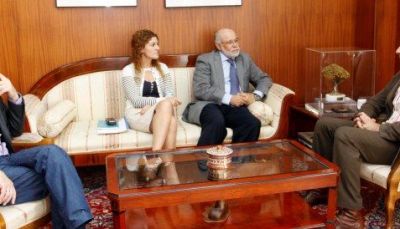
The Cabildo, through its areas of Education and Culture and Agriculture and Livestock, has expressed its satisfaction with the "good reception" that the General Directorate of Education of the Government of the Canary Islands is having to the proposals made from these areas to impart vocational training in the field of agriculture and the food industry in Lanzarote. This was stated by the councilors Emma Cabrera and Francisco Fabelo, heads of the respective areas, who hope that the proposals to include these disciplines in the Canary Islands Vocational Training Plan 2013-2016 will materialize.
The proposals consist of, on the one hand, a Medium Grade Training Cycle (CFGM) of Agroecological Production, in alternating annual rotation with a Medium Grade Training Cycle in Olive Oil and Wines. In turn, an Initial Professional Qualification Program (PCPI) of auxiliary activities in nurseries, gardens and garden centers has been requested.
These are two newly implemented teachings on the island. "The convenience of its implementation is supported by a study carried out by the Cabildo that considers these activities among those that have the best expectations of economic growth," the first institution said in a statement.
Diversity of the offer
The councilor considers the alternating course format that emerged from the dialogue table on the Plan very interesting, "because it allows for greater diversity in the offer of specialties and, with it, more qualifications in the same professional family, as well as greater flexibility in planning." "This allows us to converge with the real needs of the island's companies and promote certain sectors of activity, or the creation of new initiatives from the same students through entrepreneurship," he said.
From the Area coordinated by Francisco Fabelo, the implementation of these new training cycles is highly valued, as they would reinforce a primary sector that is "in a phase of renovation on the island." It also has approved infrastructures for training such as the Cabildo's Experimental Agricultural Farm, from which collaboration would be offered in different areas, as well as the possible organization of specialized courses that complement and expand the qualification of these future professionals.
On the other hand, Fabelo pointed out that "there is a good disposition in the companies of the sector, for example the wineries, when establishing a collaboration agreement so that these students can carry out their practices." It should be remembered that the Cabildo has promoted through a project the ecological cultivation of the olive tree, through which it offers technical advice to the producers who already participate in it.


