
The Teguise City Council has signed a collaboration agreement with the Federation of Agricultural and Fishing Associations Castillo de Teguise (FASAT) that will allow the transfer of a warehouse in the municipality's Agrotechnological Center for use during the next four years. The purpose of this agreement is to allocate the space to livestock breeding, thus supporting the activity of the municipality's farmers.
The transfer also includes the installation of a water meter that will facilitate the water supply in the warehouse, "reinforcing the City Council's commitment to promoting local agriculture and livestock farming", they point out from the City Council.
The mayor of Teguise, Olivia Duque, stressed that "the City Council continues to work hand in hand with the primary sector, making available resources and infrastructure that contribute to ensuring its viability and sustainability. This agreement is yet another example of our willingness to stand by the farmers and ranchers of Teguise in particularly difficult times."
For her part, the Councilor for Agriculture, Livestock and Fisheries Myriam Jorge, stressed that "with this transfer we are taking an important step so that FASAT members have more resources and security. From the area we will continue to promote initiatives that promote self-sufficiency, reduce costs and strengthen generational change in the primary sector."
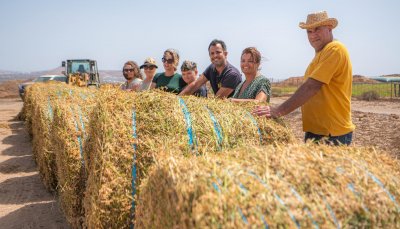
In parallel, the City Council has also ceded to FASAT a plot of land on the mountain for agricultural use, specifically for the cultivation of alfalfa for livestock feed. This project, which began as a pilot experience several months ago, has already offered positive results and its expansion is planned to increase production, reduce costs and improve the food self-sufficiency of farmers.
In addition to improving the conditions of farmers in the present, the City Council of Teguise wants this agreement to serve as a basis for larger projects in the future. The implementation of kid goat breeding in the Agrotechnological Center and the local production of alfalfa seeks to alleviate the economic pressure borne by the sector and consolidate a more sustainable working model adapted to reality.


