
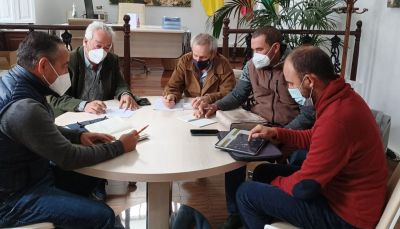
The Haría City Council has asked "the relevant administrations" to adopt measures against the Mexican cochineal plague ('Dactylopius opuntiae'), which is attacking the northern prickly pear farms and "is preying on abandoned plantations, which represent 90% of the crops in Guatiza and Mala".
"The massive spread of this plague could wipe out this crop completely in less than two years," warns the Consistory, which on Monday held a meeting with representatives of the agricultural sector of the municipality, in order to find solutions to their main problems and listen to their demands.
The meeting was attended by the acting mayor of Haría, Víctor Robayna, the councilor of the Primary Sector, Fernando Fontes, the president of the Irrigation Community, Leandro Caraballo, the president of the Guatiza-Mala Agricultural Cooperative Society, Pedro González, and the professor of the Department of Agriculture of the Teguise Institute, Teno Osorio.
Councilor Fernando Fontes explained after the meeting the intention of the City Council and the northern agricultural sector to find alternatives to cochineal, such as pineapple, "so that the abandonment and problems that this historical tradition is suffering reduce its impact."
"We are moving forward that we will transfer to the Cabildo of Lanzarote the demand that action be taken to solve the lamentable state of this resource on our Island, as well as the request for the immediate opening of the Museum Center for the Transformation of Cochineal, in Mala, which has been closed since the beginning of the pandemic and is negatively affecting the development of the sector," Fontes stressed.
In addition, he insisted that "the abandonment of the landscape of Haría, and more specifically the field of prickly pears of Guatiza and Mala, is ending the hopes of the cochineal harvesting farmers, who have not been able to market or exploit this resource for food, cosmetics or pharmaceuticals."


