
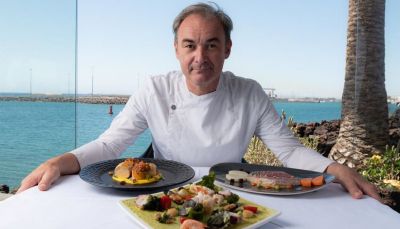
The Art, Culture and Tourism Centers have initiated the procedures to present the candidacy of the Castillo de San José restaurant to the prestigious Michelin and Repsol guides.
“We believe that this firm commitment to the local product, to dishes that rescue traditional aromas and flavors of the island, to Lanzarote wines and craft beers, and to an attentive and careful service in a space with the unique stamp conferred by the creativity of César Manrique make it worthy of being alongside those who are today references of gastronomy in our country in two essential guides for those who wish to know the gastronomic heritage of a destination,” says the CEO of the Centers, Benjamín Perdomo, who highlights the “effort made in recent months to restore the shine and splendor that always characterized this restaurant.”
The renovated gastronomic proposal of Castillo de San José is designed by the Lanzarote chef Orlando Ortega in collaboration with the team of kitchen professionals of the Centers. Articulated around the local product, Ortega has rescued traditional recipes from the history of Castillo de San José and reinterpreted them with avant-garde techniques applied “with common sense” to value the work of the men and women of the island's primary sector through dishes as suggestive as 'Manrique's Fish', 'Cherne Delights with Prawns', 'Almogrote Croquettes' and 'Grilled Octopus Rejo with Peppers', among others.
An extensive wine cellar of the Designation of Origin Wines of Lanzarote and a representation of the Malpeis, Nao and Los Aljibes de Tahiche craft beers give it its own identity as a standard of island gastronomy, according to the Centers.
About the Michelin and Repsol guides
Created in 1900 by André Michelin, a tire manufacturer, to provide valuable information for automobile pioneers, the Michelin Guide is today, without a doubt, the international tourist catalog of reference. It is distinguished by assigning one to three "stars of good food" to gastronomic establishments that, in reference to different parameters set by their own judges, stand out in quality, creativity and care of their dishes: three stars indicate an exceptional cuisine that justifies the trip itself, two stars indicate first-class quality in its type of cuisine, and one designates a very good restaurant in its category. In addition, it assigns from one to five couverts depending on the comfort and service with which customers are served.
For its part, the Repsol Guide is a Spanish tourist guide created in 1979 that proposes car routes and provides information of tourist interest about the places through which you can pass, giving great importance to gastronomy, and especially to wines. In this case, the Association of Friends of the Royal Academy of Gastronomy and the Brotherhood of the Good Table select and value the restaurants, to which they grant one, two or three suns depending on the culinary excellence, the quality of the raw material and its execution, the respect for the cuisine of the region, its wine list and the table and room service.


