
"Due to its volcanic nature, the Canary Islands have the best mineral-medicinal waters in our country", said Dr. Eduardo Navarro García, head of the Medical Hydrology Unit at the University of La Laguna, on Wednesday afternoon. The expert made these statements during his intervention in the IX edition of the Summer courses of the Environmental University of La Palma, where he analyzed the characteristics and therapeutic uses of water resources.
Eduardo Navarro argued, according to a statement from the university, that the mineral waters of the Canary Islands are useful for the treatment of diseases derived from disorders of the musculoskeletal or digestive system, among others, and added that "the presence of silicic anhydride makes the difference between the waters of the Archipelago and the rest of the peninsula, since this component has therapeutic effects for the reduction of cholesterol, decrease in blood pressure or for skin conditions, given its remineralizing power".
FIRST REGION
He also stated that the Canary Islands are the first region in the world with the highest number of springs and dams per square kilometer and the first Spanish autonomous community in terms of the number of water bottling companies "so we cannot waste the countless opportunities that this natural resource generates in all its areas," he added.
The doctor and researcher took a tour of the main springs, wells and spas registered in the Islands, highlighting that "of the ten existing, only one, the Pozo de la Salud in El Hierro, is active despite the fact that they have an unparalleled potential not only from the therapeutic point of view but also from the socio-economic development".
Navarro also highlighted the quality of the chlorosodic waters of Bocacangrejo (El Rosario), San Telmo (Puerto de la Cruz), Santa Catalina and El Rincón (Gran Canaria) or the bicarbonate-sodic waters of Firgas or Teror (Gran Canaria).
POZO DE LA SALUD SPA
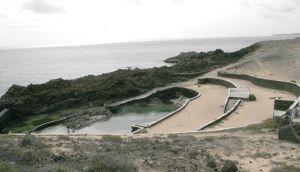
Regarding the Balneario del Pozo de la Salud, Professor Fabián Hernández Romero, collaborator of the Department of Pharmacology and Medical Hydrology, who shared a presentation with Navarro García, highlighted "that despite being the only active well, with more than 300 years of history, its history is one of the great unknowns of the Archipelago". Therefore, he called for the "cataloging of it as a "Asset of Cultural and Ethnographic Interest"".
ACN Press


