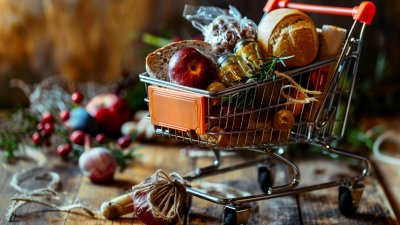
Christmas is synonymous with celebration, but also with consumption peaks that send prices and pressure on the logistics chain soaring. According to the **Organization of Consumers and Users (OCU)**, the average price of the Christmas basket has risen by **5.1% in 2025 compared to 2024**, accumulating an increase of **57% in the last decade**.
Some key products have reached historic highs: beef round and oysters have become 19% more expensive, Iberian ham 10%, suckling lamb 8%, and turkey 7%. Even typical fruits such as pineapple and pomegranate show increases close to 9%.
In the case of Lanzarote, furthermore, the Association of Consumers and Users of Lanzarote (ACULANZA) has denounced that different supermarkets in Lanzarote are not applying the Competition Law to set product prices. It gives the example of milk, eggs, and bananas with almost identical prices in their most economical versions.
ACULANZA also points out that the prices of some basic products have increased **by up to 40% on the island compared to three years ago**.
In this context, planning becomes the common ground between saving money and sustainability. Meritxell Hernández, sustainability expert and CEO of Roll’eat, a company specializing in waste reduction solutions, explains: "Planning is not only important for protecting our wallets, but also for taking care of the environment," adding: "Buying in advance allows us to avoid overpricing, but also to reduce pressure on logistics, avoiding express shipping which is up to 30% more polluting than standard shipping."
The expert insists that sustainability also involves how we shop. Opting for **local shopping** not only reduces the transport footprint but also supports the local and circular economy. Furthermore, **choosing bulk products and avoiding unnecessary packaging** is key to reducing the waste that skyrockets at this time of year. "Every gesture counts: bringing reusable bags, refusing plastics, and prioritizing unpackaged foods are actions that make a difference," adds Hernández.Even in the final stretch, there's still room to act. **Buying meats and fish now and freezing them allows you to avoid the price increase that occurs in the days leading up to Christmas Eve**. Substituting strained products for more affordable alternatives, such as local fish instead of imported seafood, also helps to control spending. Reducing waste by adjusting quantities and opting for local markets are gestures that make a difference
Ultimately, express planning is the best strategy for saving and consuming responsibly. This Christmas, sustainability is also decided in small gestures.



Add La Voz de Lanzarote as a preferred Google source.
Stay informed with the latest current news.