
Photos: Sergio Betancort
The Agrupación Folclórica Malpaís de La Corona de Haría celebrated the XIII edition of its festival last Friday. As has been traditional since its inception, each year it dedicates its festival to one of the old traditions, some of them already lost in time, such as the one they rescued on this occasion dedicated to "Las Caleras".
At 9:30 p.m. it began with the host, Nacho Romero, who after greeting the public gave a valuable history of how important the Caleras were in Lanzarote society. They were located from Órzola in the north to Los Ajaches in the south and others also located in other inland towns. Romero explained in great detail how the process of putting the lime stone into operation and commercializing it was carried out, once this process was completed, as well as the qualities that lime provided to eradicate infectious germs or the disinfection of water, leaving it suitable for human consumption.
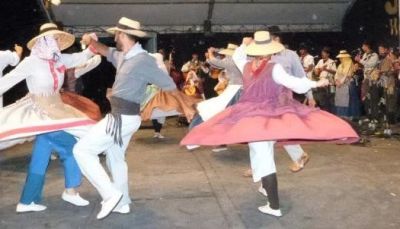
From that moment on, the first guests of the festival, the members of the Coros y Danzas Arrecife folk group, took to the stage. This group played and danced the most traditional pieces of Canarian folklore such as the Isa de Salón, Sorondongo, Folías, Seguidillas and Malagueñas. With very tuned voices and very elegant choreographies, they made the public reward them with their applause.
In second place, the Guayadeque folk group performed. Arriving from El Carrizal de Ingenio in Gran Canaria with a total of about 60 members distributed among the bodies of touch and dance. This family performed some of the representative compositions of Gran Canaria and Ingenio such as the Polka del Carrizal, Santo Domingo and Saltonas, Isa or the chain of Aires de Lima. The Guayadeque group stood out for its slow dances and clothing inspired by that which existed in the Carrizal area around the 18th and 19th centuries. Its members came down from the stage very happy for the expressions of affection received by the public before and after their performance.
Immediately afterwards, the Malpaís de La Corona folk group, organizer of the festival, took to the stage with its members very excited and happy with how the event was developing. The director of the touch body, Mingo Cedrés, once he gave the start, the stage was transformed, filling with color with their traditional costumes that so much remember those used by our ancestors. The chords of the Folías, Seguidillas, Sorondongo, Isa and Malagueña, the dancers of Malpaís are pure nerve on the stage highlighting the vivacity of their movements. This is why the public likes it very much, rewarding them with their applause. Once the delivery of gifts was carried out, the lights of the stage went out, thus ending the festival.
Add La Voz de Lanzarote as a preferred Google source.
Stay informed with the latest current news.


