
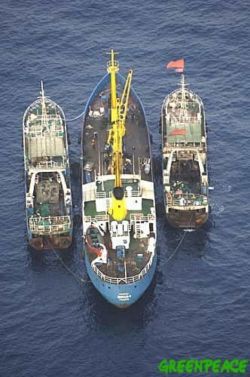
Greenpeace and the Environmental Justice Foundation (EJF) have presented to the Ministry of Fisheries, in Madrid, several videos and photographs showing the illegal transshipment of fish from Guinea Conakry to the Port of Las Palmas, which is expected to enter in two or three days. According to the legislation of the African country, transshipment is only allowed in Guinean waters.
According to Greenpeace, the Port of Las Palmas is characterized "by being used by pirate fleets operating in West Africa to unload fish."
During the time that the Esperanza has remained in West Africa, Greenpeace and the EJF have observed the activities of 104 foreign vessels in the waters of Guinea Conakry. The NGO assures that about 50% of these ships "were involved or related to illegal fishing activities, including fishing without a license, fishing within the twelve-mile zone reserved for artisanal fishermen, or fishing by ships without a name."
"This is a unique opportunity for Spain to prove that it is serious about fighting pirate fishing," said Sebastián Losada, Greenpeace's head of oceans. "If Spain does not act, it will show very little willingness to end the problem of Las Palmas."


