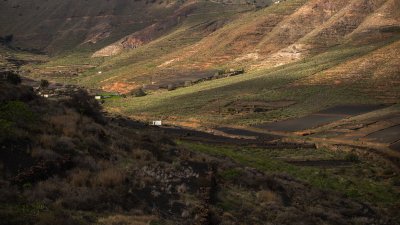
The rains of recent weeks have made the fields of Lanzarote sprout, surprising residents with a more vivid green color than usual.
The passage of storm Emilia just over a week ago left cold temperatures in Lanzarote, reaching historic cold records at a weather station on the island, but also more than 40 liters of rain per square meter in towns like Haría or Arrieta and up to 90 in Yaiza
A sample of the constant rainfall over the past week, which will also be present on Christmas Eve and Christmas, has made the tabaibas (Euphorbia), verodes (Fleinia neriifolia), and ahulagas (launaea arborescens) appear with a more intense color.
Native to the Canary Islands, the verode is an endemic species of the Canary Islands. It is a perennial shrub that can reach up to three meters in height. This species usually loses its leaves due to lack of rainfall and regains them with the autumn rains. This species is typical of the Canary Islands' cardonal-tabaibal vegetation.
Another of the species that can be observed these days with a different glow are the tabaibas. Its name, according to the Canary Islands Government website, is a Guanche word, which was chosen by the indigenous Canary Islanders and originated on the islands of Lanzarote and Fuerteventura. There are a total of six different types of tabaibas in the Canary Islands.
In addition to verodes and tabaibas, these days the ahulagas or julagas (Launaea arborescens) can also be seen with a more intense color, which, although not endemic to the Canary Islands, is a native species of the archipelago.


Add La Voz de Lanzarote as a preferred Google source.
Stay informed with the latest current news.